
Memory Supplements After 50: What Has Been Studied at This Age
You used to be the quickest one in the meeting, and lately a word goes missing mid-sentence. Here is which memory ingredients were actually tested in people your age, who took part, and what to check before you buy.
Quick answer
A few ingredients were tested in adults over 50: citicoline improved memory in a 12-week trial of people aged 50 to 85, bacopa had mixed results, phosphatidylserine showed slight gains, and omega-3 showed none. Where women and men were compared, results did not differ. Start with sleep and exercise; two formulas that include several of them follow below.
It happens on a call you could run in your sleep. You reach for an ordinary word, the one you have used a hundred times, and it is not there. You talk around it, nobody seems to notice, and the meeting moves on. You noticed.
You were always the fast one: first with the number, first with the answer. Now there is a half-second gap you did not have at 45, and a third coffee that no longer closes it. You are not looking for a miracle. You want to know whether anything has actually been tested in people your age, and whether it matters that you are a woman or a man.
This guide answers both, with who took part in each study, how much they took and what was found, so you can judge a label for yourself.
Further down, we look at two formulas built on ingredients studied in adults over 50: Brain C-13 and NovuBrain+ — each with a money-back guarantee.
What Changes After 50, In Women And In Men?
MedlinePlus, the National Library of Medicine’s health encyclopedia, puts it plainly: slowing of thought, memory and thinking is a normal part of aging. Nerve cells pass messages along a little more slowly over time. For someone whose edge was speed, that is exactly where the change shows first.
For many women, menopause adds its own layer. Cleveland Clinic explains that falling estrogen can cause momentary lapses in recall, and that it tends to affect verbal memory in particular, such as finding words and names. Poor sleep, hot flashes and night sweats, stress and constant multitasking make it worse. The same article notes that this kind of fog tends to stay stable or improve. Our guide to brain fog after menopause covers that stage in detail.
For men, one overlooked cause sits in the bedroom. The National Heart, Lung, and Blood Institute notes that obstructive sleep apnea is more common in males, that the risk rises with age, and that it can cause problems with learning, focusing and reacting during the day. Loud snoring is more common in men with it; women more often notice fatigue, headaches and broken sleep.
None of this is a reason to worry. It is a reason to rule out the fixable causes before you judge any capsule, because a supplement cannot make up for a night of interrupted breathing.
How Can I Improve My Memory After 50?
Three steps have backing from public health sources, cost nothing, and work alongside anything you decide to take later.
1. Move most days
The CDC notes that regular physical activity helps keep thinking, learning and judgment skills sharp, and that some brain benefits happen right away. It recommends 150 minutes a week of moderate activity for adults, which works out to about 22 minutes a day. MedlinePlus adds that activity promotes blood flow to the brain.
2. Treat sleep as part of the job
If you wake unrested, snore loudly, or someone has noticed pauses in your breathing, mention it to your doctor. A sleep study can answer the question, and the answer changes everything else on this page.
3. Keep your mind in use, and do one thing at a time
MedlinePlus suggests mental exercise such as reading, crossword puzzles and stimulating conversation. Cleveland Clinic’s advice for foggy stretches includes avoiding multitasking, which suits a workday built on back-to-back calls less than we would like.
If your slump lands at two in the afternoon rather than mid-sentence, our guide to afternoon brain fog at work covers the coffee cutoff, the lunch and the short nap.
Which Ingredients Have Been Studied In Adults Over 50?
The studies below enrolled adults around or past 50, and they are the ones worth knowing before you read any label. The figure shows who took part in each.
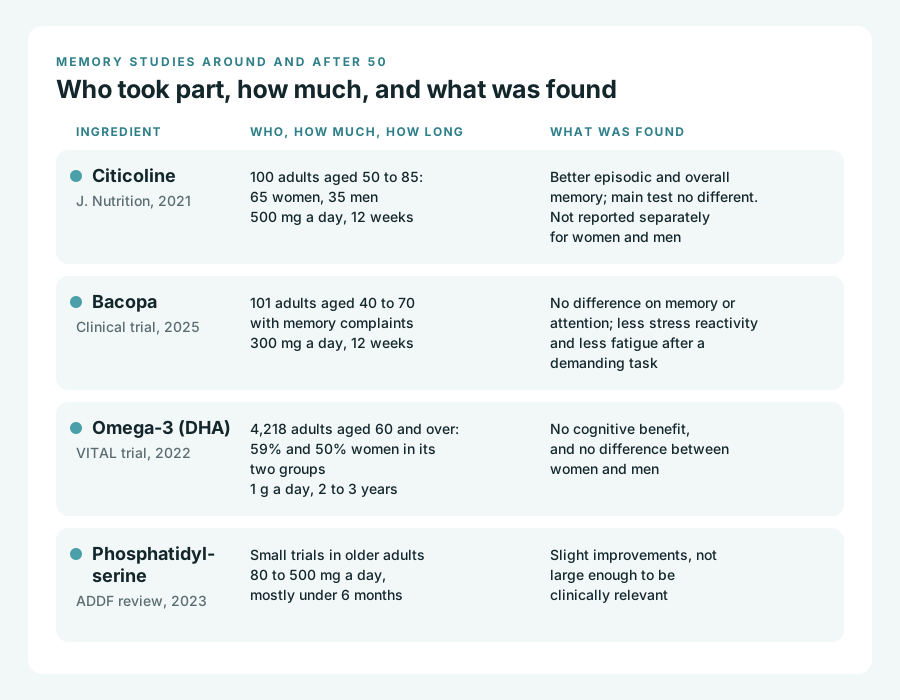
Citicoline: a 12-week trial in adults aged 50 to 85
In a 2021 trial in The Journal of Nutrition, 100 healthy adults aged 50 to 85 whose memory had slipped with age took 500 mg of citicoline a day for 12 weeks, or a placebo. On the main test there was no difference; on episodic memory, the kind you use to recall what happened and where, and on an overall memory score, the citicoline group improved more. The average age was about 64, 65 of the 100 were women, and the study was sponsored by a citicoline maker.
For focus at work, the picture is thinner. The Alzheimer’s Drug Discovery Foundation, in its 2024 report, describes the attention trials as small: one in healthy middle-aged women found better attention, while one in middle-aged to older adults found a small effect on memory and none on attention. It lists typical amounts of 250 to 1,000 mg a day. Our guide to citicoline or choline covers the forms and the long-term data.
Bacopa: tested past 50, with mixed results
The Merck Manual describes a trial in adults over 55 who took 300 mg of bacopa a day and improved more than placebo on verbal learning and delayed recall, and it calls the benefits in healthy older adults modest, from small trials. A 2025 trial in Clinical Drug Investigation gave the same 300 mg a day for 12 weeks to 101 adults aged 40 to 70 with memory complaints and found no difference on memory or attention, its main questions. The bacopa group did report less stress reactivity, and less fatigue after a demanding task, along with more stomach complaints and headaches. Our guide to bacopa after 60 covers dose and timing.
Phosphatidylserine: slight gains in older adults
The Alzheimer’s Drug Discovery Foundation’s 2023 report finds that phosphatidylserine may have some benefit for memory, but that the small trials in older adults showed slight improvements, not large enough to be clinically relevant. Amounts ran from 80 to 500 mg a day, and most studies lasted under six months.
Omega-3 and DHA: the largest trial, and the one that compared women and men
VITAL, a large US trial, enrolled men from age 50 and women from age 55. Its memory studies followed 4,218 people aged 60 and over who took 1 g of marine omega-3 a day, 840 mg of it EPA and DHA, or a placebo for two to three years. Omega-3 gave no cognitive benefit. Women made up 59% and 50% of its two groups, and when the researchers checked, the result did not differ between women and men. Our guide to phosphatidylserine or fish oil sets the two side by side.
Lion’s mane: often searched, still early
Lion’s mane comes up constantly for focus in your 50s. Memorial Sloan Kettering lists only a handful of small human studies, some in older adults. Neither formula below contains it; our guide to lion’s mane and bacopa describes each trial.
Does It Need To Differ For Women And Men?
Not in the ingredients, as far as the research goes. The citicoline, bacopa and omega-3 trials above enrolled women and men together and gave everyone the same amount. The citicoline trial reported its results for the group as a whole, and the one large trial that checked found no difference by sex.
What does differ is what to check first. For a woman in her fifties, that may mean menopause symptoms and the sleep they cost. For a man, it may mean snoring and sleep apnea. For both, it means the medicine list, which is where most of the questions in the next sections come from.
What Should You Look For Before You Buy?
- Ingredients tested at your age. Citicoline, bacopa and phosphatidylserine have trials in adults over 50, with the mixed results described above.
- An amount per serving, if matching the trials matters to you. A printed amount lets you and your pharmacist set the label beside the 500 mg or 300 mg the studies used.
- A routine that fits a workday. The trials ran 12 weeks. Once with breakfast suits some calendars; three times a day with meals suits others.
- A refund window you can plan around. Note how long the guarantee runs, and decide in advance at which week you will judge the formula, while the window is still open.
Which Formulas Are Built On Ingredients Studied After 50?
Brain C-13 comes from Zenith Labs, a company with a postal address and a phone number on the bottle. Its published Supplement Facts panel lists citicoline 250 mg, bacopa 300 mg and phosphatidylserine 100 mg, with rhodiola, turmeric and rosemary; the sales page also names saffron and huperzine A. As its review explains, that panel describes a 60-capsule bottle at two a day, while the bottle shown holds 90 at three a day, so it appears to describe an earlier version. Read the panel on the bottle you receive. The guarantee runs 180 days.
NovuBrain+ pairs bacopa and huperzine A, and phosphatidylserine and DHA, with L-glutamine, DMAE and vitamin B12, taken as two capsules with breakfast. The maker describes it as caffeine-free, and it is sold as a one-time purchase with no auto-ship. No amount is published for any ingredient, which its review explains. The guarantee runs 60 days.
Two formulas worth a closer look
Two formulas built on ingredients studied after 50
Once sleep and the everyday steps are in place, these two draw on the ingredients tested at this age — each with a money-back guarantee.
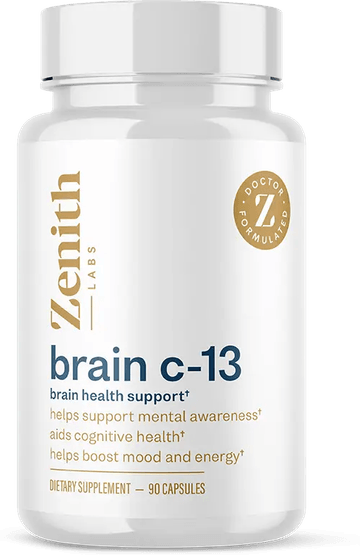
Brain C-13
Capsules
Its published Supplement Facts panel lists citicoline 250 mg, bacopa 300 mg and phosphatidylserine 100 mg, three ingredients with trials in adults over 50, from Zenith Labs, a company you can look up.
- Readers who want to see amounts on the label
- Anyone who wants six months to decide
Covered by a 180-day money-back guarantee
Before you start · Huperzine A, named on the sales page, is worth raising with a memory medicine or a beta-blocker; rhodiola with blood pressure medicine or an antidepressant; turmeric with a blood thinner; bacopa with thyroid medicine.
See Brain C-13 on the official siteRead our Brain C-13 review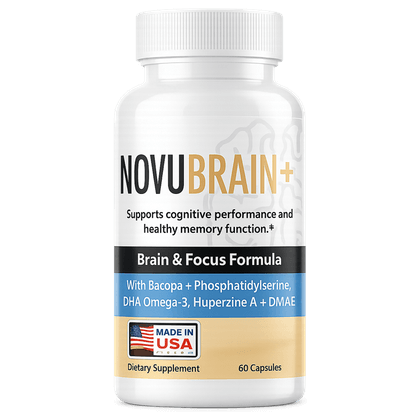
NovuBrain+
Capsules
Bacopa and phosphatidylserine, both studied in adults over 50, with DHA and huperzine A, in two caffeine-free capsules with breakfast.
- Readers who want one routine before work
- Anyone who wants no caffeine and no auto-ship
Covered by a 60-day money-back guarantee
Before you start · Huperzine A is worth naming if you take a memory medicine, a beta-blocker or a calcium channel blocker; bacopa with thyroid medicine.
See NovuBrain+ on the official siteRead our NovuBrain+ reviewListed in no particular order. We publish no scores or rankings.
Who Should Check Before Starting?
Take the label, or a photo of it, to your pharmacist or doctor if any of these apply to you.
- You take thyroid hormone. The Merck Manual notes that bacopa may raise thyroid hormone levels and advises people on thyroid hormone medicine not to take it.
- You take a beta-blocker, a calcium channel blocker, or a prescription memory medicine. Memorial Sloan Kettering advises against combining huperzine A with memory medicines such as donepezil, and notes it may slow the heart further with beta-blockers or calcium channel blockers. The Merck Manual adds that bacopa may affect glaucoma and memory medicines.
- You take a blood thinner such as warfarin. Memorial Sloan Kettering notes turmeric may increase bleeding risk and asks people on a blood thinner to talk to their provider before rhodiola. The Alzheimer’s Drug Discovery Foundation lists a possible increase in bleeding risk with phosphatidylserine.
- You take an antidepressant or blood pressure medicine. Memorial Sloan Kettering notes rhodiola may increase serotonin-related side effects and add to the effect of blood pressure medicines.
The Brain C-13 review also notes that its published panel lists soy, which matters if you avoid it. If you take several medicines, our checklist for several medicines shows what to bring. Never stop, reduce or change a prescription to make room for a supplement.
When Should You See A Doctor?
See a doctor when changes go beyond a lost word in a meeting, which is common after 50. MedlinePlus advises contacting your provider if changes in memory, thinking or how you manage tasks affect your daily life, or if they appear suddenly or feel different from your usual pattern.
It is also worth an appointment if you snore loudly or wake unrested, or if menopause symptoms are costing you sleep. Those have answers a doctor can give.
Ready to compare? Go back to the two formulas above, or read the full reviews of Brain C-13 and NovuBrain+.
Frequently asked
What is the best memory supplement for women over 50?
No study has singled one out, and the ingredients with trials at this age were tested in mixed groups. Women were well represented: 65 of the 100 people in a 2021 citicoline trial of adults aged 50 to 85 were women. Before choosing, it helps to know whether menopause, sleep or a medicine is part of the picture, then look for a printed amount and a routine you can keep for 12 weeks.
What is the best memory supplement for men over 50?
The research does not point to a men-only answer. In the VITAL trial, where women and men over 60 took omega-3 for two to three years, the result did not differ by sex. One check matters more for men: the NHLBI notes that sleep apnea is more common in males and can cause trouble learning, focusing and reacting, so loud snoring is worth raising with a doctor first.
Does lion’s mane help focus in your 50s?
The evidence is early. Memorial Sloan Kettering lists a handful of small human studies, including some in older adults, and notes stomach discomfort, nausea and skin rash as reported side effects. Our guide to lion’s mane and bacopa sets out what each trial measured. Neither formula on this page contains lion’s mane.
Is citicoline good for focus at work?
The attention trials are small and mixed. The Alzheimer’s Drug Discovery Foundation notes that one study in healthy middle-aged women found better attention, while another in middle-aged to older adults found a small effect on memory and none on attention. Typical amounts in studies run from 250 to 1,000 mg a day.
Does bacopa work for adults over 50?
Results are mixed. The Merck Manual describes a trial in adults over 55 who took 300 mg a day and improved on verbal learning and delayed recall compared with placebo. A 2025 trial of 300 mg a day for 12 weeks in adults aged 40 to 70 found no difference on memory or attention, though fatigue and stress after a demanding task dropped more. People on thyroid hormone should not take it without asking their doctor.
How long before a memory supplement makes a difference after 50?
Weeks, not days. The citicoline and bacopa trials described here ran 12 weeks, and the honest window to judge a daily formula is 4 to 12 weeks. Decide in advance what you will watch, such as words in meetings or how the afternoon feels, and check in with yourself halfway.
References
- Aging changes in the nervous system — MedlinePlus Medical Encyclopedia — 2024
- Menopause Memory Loss: Should You Be Worried? — Cleveland Clinic — 2025
- Sleep Apnea: Causes and Risk Factors — National Heart, Lung, and Blood Institute — 2025
- Sleep Apnea: Symptoms — National Heart, Lung, and Blood Institute — 2025
- Benefits of Physical Activity — Centers for Disease Control and Prevention — 2025
- Citicoline and Memory Function in Healthy Older Adults: A Randomized, Double-Blind, Placebo-Controlled Clinical Trial — The Journal of Nutrition — 2021
- Citicoline (CDP-choline) — Cognitive Vitality Reports, Alzheimer’s Drug Discovery Foundation — 2024
- The Effects of a Bacopa monnieri Extract (Bacumen®) on Cognition, Stress, and Fatigue in Healthy Adults: A Randomized, Double-Blind, Placebo-Controlled Trial — Clinical Drug Investigation — 2025
- Bacopa — Merck Manual Professional Edition — 2025
- Phosphatidylserine — Cognitive Vitality Reports, Alzheimer’s Drug Discovery Foundation — 2023
- Marine n-3 fatty acids and cognitive change among older adults in the VITAL randomized trial — Alzheimer’s & Dementia: Translational Research & Clinical Interventions — 2022
- Lion’s Mane Mushroom — Memorial Sloan Kettering Cancer Center, About Herbs — 2024
- Huperzia serrata — Memorial Sloan Kettering Cancer Center, About Herbs — 2022
- Turmeric — Memorial Sloan Kettering Cancer Center, About Herbs — 2026
- Rhodiola — Memorial Sloan Kettering Cancer Center, About Herbs — 2026
Disclosure
All content is for informational purposes only and is not a substitute for professional medical advice, diagnosis, or treatment. Each product covered is a dietary supplement, not a prescription drug, and statements about it have not been evaluated by the U.S. Food and Drug Administration. Results vary with individual health status, consistency of use, and lifestyle. This page contains affiliate links — if you buy through them we may earn a small commission at no additional cost to you. Read our disclosure and our editorial policy.