
The 2 p.m. Slump at Your Desk: What Helps Besides Another Coffee
The third coffee buys an hour and can cost you the night. Here is why focus fades in the early afternoon, what to change first, what the popular fixes were actually tested for, and two stimulant-free formulas.
Quick answer
The early-afternoon slump is common: your body clock dips after lunch, and a short night or a heavy meal deepens it. Before another coffee, try an earlier caffeine cutoff, three-minute walking breaks, a lighter lunch and seven or more hours of sleep. If you want a daily formula, two stimulant-free options are compared below.
The morning went fine. You cleared the inbox, ran the meeting, made the calls. Then lunch, and by two o’clock the spreadsheet in front of you has gone flat. You read the same line three times. The reply you owe someone sits half written.
So you get up for the third coffee of the day. It works, for about an hour. Then the evening comes, you lie awake longer than you used to, and tomorrow’s afternoon starts with a smaller tank. Somewhere in your late forties or fifties, that trade stopped feeling like a good one.
You are not looking for a miracle. You want to know what actually moves the afternoon, what the popular fixes were tested for, and whether there is a daily option that does not put more caffeine into the day.
Further down, we look at two stimulant-free formulas: NovuBrain+ and NeuroVera — each with a money-back guarantee.
Why Does Focus Fade Around 2 P.M.?
Your body clock dips on its own. Cleveland Clinic notes that your body clock has an early afternoon dip that can make you feel sleepier, separate from anything you ate. That is why the slump can arrive even on a day you skipped lunch.
Lunch can add to it. The same Cleveland Clinic page notes that the sleepy feeling after a meal is stronger after large meals and after alcohol at lunch, and that some medicines add to it, including sedatives, antidepressants, antihistamines and some blood pressure medicines. If the fog comes mainly after eating, our guide to brain fog after meals looks at the blood sugar side of it.
Last night counts. The CDC recommends 7 or more hours of sleep for adults up to 60, and lists better attention and memory among the benefits of getting enough. An afternoon at the desk is often where a short night shows up first.
And the coffee can feed the cycle. A 2023 meta-analysis in Sleep Medicine Reviews pooled 24 studies and found that caffeine reduced total sleep time by 45 minutes, and reduced deep sleep. A shorter, lighter night makes the next afternoon harder, and the next afternoon asks for more coffee.
What Should You Change Before Another Cup?
Start with the coffee cutoff, the sitting, the lunch, a nap and tonight’s sleep: none of these steps costs anything, and each one has research behind it. They also work alongside anything else you decide to try.
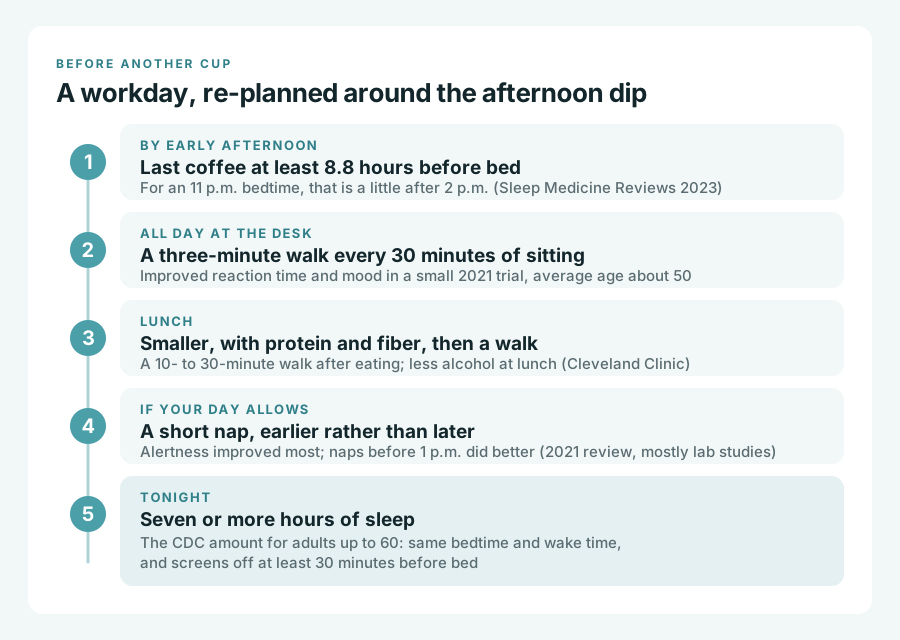
1. Move the coffee cutoff earlier
The same 2023 meta-analysis worked out a timing rule: to avoid losing sleep, a cup of coffee (about 107 mg of caffeine) should be drunk at least 8.8 hours before bedtime. For an 11 p.m. bedtime, that is a little after 2 p.m. — which is exactly when the third cup tends to happen. The CDC gives the same advice in plainer words: avoid caffeine in the afternoon or evening.
2. Break up the sitting
In a small 2021 crossover trial in Frontiers in Human Neuroscience, 13 middle-aged adults with an average age of about 50 sat for three hours on three separate days. On the day they got up for a three-minute walk every 30 minutes, their reaction time on a demanding working memory task improved, and so did their mood and alertness. It is a small study, but the habit is easy to test: a walk to the far printer or a lap of the floor counts.
3. Lighten the lunch, then walk
Cleveland Clinic suggests smaller, balanced meals with protein and fiber, less alcohol at lunch, and a 10- to 30-minute walk after eating. If a lunch walk is not possible, the walking breaks above cover some of the same ground.
4. A short nap, if your day allows it
A 2021 systematic review of 11 studies with 381 participants found that cognitive performance improved after a daytime nap, most of all alertness, with the benefit lasting up to two hours. Naps taken before 1 p.m. did better. Almost all of the studies were run in a laboratory, and the authors asked for more research in real workplaces — so treat it as worth trying where you can, not as a rule.
5. Protect tonight
The CDC suggests going to bed and getting up at the same time every day and switching off electronic devices at least 30 minutes before bed. The afternoon you want tomorrow starts there.
What Can L-Theanine, B12 And Green Tea Actually Do?
Each has a narrower result than its reputation as a focus fix without the jitters. Here is what each was tested for, and in whom.
L-theanine
L-theanine is an amino acid found in green tea. A 2021 randomized, placebo-controlled trial in the Journal of Medicinal Food followed 50 Japanese adults aged 50 to 69 who reported that their memory had declined. A single dose of about 100 mg improved reaction time on an attention task and correct answers on a working memory task. After 12 weeks of daily use, there was no difference from placebo on the cognitive tests. The trial was funded by a tea company. That is a modest, short-term signal, not a settled answer.
Green tea
Green tea is often sold as the gentle alternative to coffee. The NIH’s National Center for Complementary and Integrative Health notes that green tea does contain caffeine, so it is not a stimulant-free option. It also notes that liver injury, although uncommon, has been reported in some people who used green tea products, mainly extracts in tablet or capsule form. Our guide to caffeine-free brain supplements covers the other plant names under which caffeine appears on a label.
Vitamin B12
B12 matters most when you are low in it, and a blood test is the only way to know. A 2021 meta-analysis in Nutrients pooled 16 randomized trials with 6,276 people who did not have an overt deficiency, and found no effect on any area of thinking or memory. Only one trial measured everyday fatigue, so the authors could not draw a conclusion there. If you take metformin, our article on metformin and B12 explains the test to ask for.
What Do Stimulant-Free Formulas Rely On Instead?
They rely on ingredients such as bacopa and huperzine A, which are not designed to be felt within the hour. Its ingredients were studied over weeks of daily use, and it helps to be exact about what they measured.
Bacopa is the ingredient with the deepest research among the plants in this aisle. A 2025 trial in Clinical Drug Investigation gave 101 adults aged 40 to 70, all with self-reported memory and attention problems, either 300 mg of bacopa extract or a placebo daily for 12 weeks. There was no difference in verbal learning, attention or working memory. The bacopa group did report greater reductions in stress reactivity, and less fatigue and stress after a mentally demanding computer task — outcomes the authors say need confirming in future trials. For a working day, that is the finding worth knowing.
Huperzine A works differently: it slows the enzyme that breaks down acetylcholine, a messenger involved in memory. Memorial Sloan Kettering notes that the evidence on memory remains limited, and it lists several medicines to raise before taking it, covered below.
Neither formula below contains L-theanine or green tea among its named ingredients. Both are described by their makers as stimulant-free.
NovuBrain+ is two capsules with breakfast, pairing bacopa with huperzine A and phosphatidylserine with DHA omega-3, plus L-glutamine, DMAE and vitamin B12. The maker frames it around the word that will not come and the two o’clock slump. The sales page publishes no amount for any of the seven compounds, and it is sold as a one-time purchase with a 60-day guarantee; the comparison page sets it beside buying the compounds separately.
NeuroVera is two capsules a day, built around bacopa and lion’s mane, with gotu kola, schisandra and shilajit alongside. No amount is published for the five ingredients. A bottle lasts 30 days, it can be bought one bottle at a time, and the guarantee runs 365 days; its comparison page looks at one bottle against three or six. As with every finished formula sold this way, neither has a published trial on its exact combination.
Two formulas worth a closer look
Two stimulant-free formulas for the working day
Both are described by their makers as stimulant-free, so there is no extra caffeine to plan your afternoon around — and each comes with a money-back guarantee.
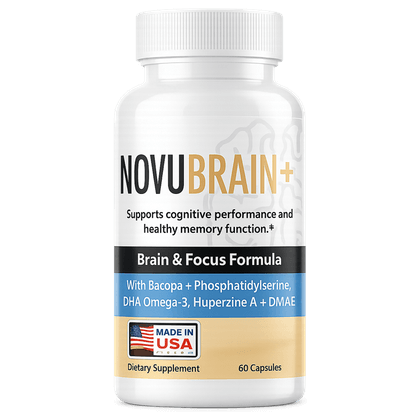
NovuBrain+
Capsules
Two caffeine-free capsules with breakfast, pairing bacopa with huperzine A and phosphatidylserine with DHA omega-3, plus vitamin B12 — several studied compounds in one morning routine.
- Readers who want several studied compounds in one routine
- Anyone avoiding caffeine and auto-ship
Covered by a 60-day money-back guarantee
Before you start · Huperzine A is worth naming if you take a beta-blocker, a calcium channel blocker or a prescription memory medicine.
See NovuBrain+ on the official siteRead our NovuBrain+ review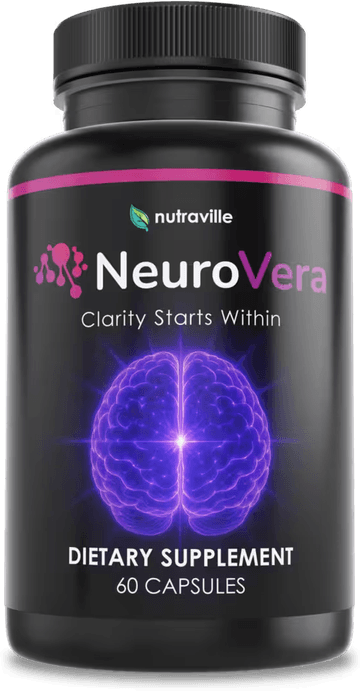
NeuroVera
Capsules
A stimulant-free capsule built around bacopa — studied in a 2025 trial that reported less fatigue after a demanding task — and lion’s mane, with gotu kola, schisandra and shilajit alongside.
- Readers who want to try one bottle first
- Anyone who prefers a stimulant-free routine
Covered by a 365-day money-back guarantee
Before you start · Mention bacopa if you take thyroid medicine or a sedative.
See NeuroVera on the official siteRead our NeuroVera reviewListed in no particular order. We publish no scores or rankings.
Who Should Check Before Starting?
Anyone in the situations below should check with a doctor or pharmacist first, because stimulant-free does not mean interaction-free. Take the bottle, or a photo of the label, to your pharmacist or doctor if any of these apply:
- You take a beta-blocker or a calcium channel blocker. Memorial Sloan Kettering notes that huperzine A may lower heart rate with these medicines. It also lists prescription memory medicines that work the same way, such as donepezil, galantamine and rivastigmine, and medicines that block dopamine.
- You take thyroid hormone, or have a slow heart rate. A StatPearls review notes that bacopa raised thyroid hormone (T4) levels in research, and that it may worsen bradycardia, a slow heart rate.
- You take a sedative. The same StatPearls review describes bacopa as mildly sedating.
- You are thinking of green tea extract instead. The NIH’s complementary health center notes that green tea at high doses reduced blood levels of nadolol, a beta-blocker, and may interact with other medicines.
The NovuBrain+ review also flags DHA for anyone on a blood thinner. Not a complete list. Never stop, reduce or change a prescription to make room for a supplement.
When Should You See A Doctor?
Speak to a doctor if the daytime sleepiness is frequent or severe, if you snore loudly or someone has noticed pauses in your breathing at night, or if you feel shaky, sweaty or confused a few hours after eating — all signs Cleveland Clinic lists as reasons to see a provider. The National Heart, Lung, and Blood Institute notes that sleep apnea can cause daytime sleepiness and problems with focusing, and that a sleep study may be needed to find out.
If the forgetting is getting worse month over month, or colleagues have started to notice it, that is a conversation for an appointment rather than a supplement question. And if you feel sleepy, do not drive until you are alert again.
Ready to compare? Go back to the two formulas above, or read the full reviews of NovuBrain+ and NeuroVera.
Frequently asked
Why do I get brain fog at 2 p.m. at work?
Several ordinary things meet in the early afternoon. Cleveland Clinic notes that your body clock has an early-afternoon dip of its own, and that a large lunch or alcohol at lunch can add to it. A short night makes it worse, and caffeine late in the day can shorten the next night. If it is frequent or severe, it is worth raising with a doctor.
Does L-theanine help focus without the jitters?
The evidence is small. In a 2021 trial of 50 Japanese adults aged 50 to 69 with self-reported memory decline, a single dose of about 100 mg of L-theanine improved reaction time on an attention task and answers on a working memory task. After 12 weeks of daily use, there was no difference from placebo. The study was funded by a tea company.
Can a supplement stop the 2 p.m. crash?
Not in the way a coffee changes the next hour. Stimulant-free formulas are built for daily use, and their ingredients were studied over weeks: bacopa trials ran about 12 weeks. Start with the cheaper fixes first — the coffee cutoff, short walking breaks, a lighter lunch and enough sleep — and judge any formula over 4 to 12 weeks.
Is there a caffeine-free focus supplement for work?
Yes. Some formulas are described by their makers as stimulant-free. Check the ingredient list anyway, both for caffeine and for plants that contain it, such as green tea. This site does not rank products; it sets out what each ingredient was tested for, and in whom.
Does a short nap at work help?
It can help alertness. A 2021 review of 11 studies with 381 people found that performance improved after a daytime nap, most of all alertness, and that naps taken before 1 p.m. did better. Almost all of the studies were run in a laboratory rather than at work.
Should I take vitamin B12 for afternoon tiredness?
Only a blood test can tell you whether you are low. A 2021 review of 16 trials in people without an overt deficiency found no effect of B12 on memory or thinking, and there was not enough data to judge fatigue. If you take metformin or an acid reducer, ask your doctor whether a B12 test makes sense.
References
- Food Coma (Postprandial Somnolence) — Cleveland Clinic — 2025
- About Sleep — Centers for Disease Control and Prevention — 2024
- The effect of caffeine on subsequent sleep: A systematic review and meta-analysis — Sleep Medicine Reviews — 2023
- Frequent, Short Physical Activity Breaks Reduce Prefrontal Cortex Activation but Preserve Working Memory in Middle-Aged Adults: ABBaH Study — Frontiers in Human Neuroscience — 2021
- Effects of a Short Daytime Nap on the Cognitive Performance: A Systematic Review and Meta-Analysis — International Journal of Environmental Research and Public Health — 2021
- Effects of l-Theanine on Cognitive Function in Middle-Aged and Older Subjects: A Randomized Placebo-Controlled Study — Journal of Medicinal Food — 2021
- Green Tea: Usefulness and Safety — NIH National Center for Complementary and Integrative Health — 2025
- Effects of Vitamin B12 Supplementation on Cognitive Function, Depressive Symptoms, and Fatigue: A Systematic Review, Meta-Analysis, and Meta-Regression — Nutrients — 2021
- The Effects of a Bacopa monnieri Extract (Bacumen®) on Cognition, Stress, and Fatigue in Healthy Adults: A Randomized, Double-Blind, Placebo-Controlled Trial — Clinical Drug Investigation — 2025
- Huperzia serrata — Memorial Sloan Kettering Cancer Center, About Herbs — 2022
- Bacopa monnieri — StatPearls, NCBI Bookshelf — 2023
- Sleep Apnea: Symptoms — National Heart, Lung, and Blood Institute — 2025
Disclosure
All content is for informational purposes only and is not a substitute for professional medical advice, diagnosis, or treatment. Each product covered is a dietary supplement, not a prescription drug, and statements about it have not been evaluated by the U.S. Food and Drug Administration. Results vary with individual health status, consistency of use, and lifestyle. This page contains affiliate links — if you buy through them we may earn a small commission at no additional cost to you. Read our disclosure and our editorial policy.