
Brain Fog After Menopause: What Each Supplement Was Tested For, and Whether Women Past Menopause Were Included
Knowing what an ingredient was studied for is one question. Knowing who was studied is another. Here is that second answer, ingredient by ingredient.
Quick answer
Brain fog around menopause is common, and the changes in thinking are usually mild. Few supplements have been tested in women past menopause: soy isoflavones and resveratrol have, with mixed results, while bacopa, lion’s mane, omega-3 and magnesium were mostly studied in adults in general. Start with sleep, a thyroid and medicine check, and your doctor. If you want to try one, two stimulant-free formulas built on ingredients from the table are compared below.
It happens mid-sentence. You are telling a story you know perfectly well, and the word you need simply is not there. You talk around it, and the conversation moves on. You have probably not mentioned it to anyone.
You are far from the only one. And if you have started reading supplement labels, you may have wondered whether women past menopause were ever included in the research behind them. That is the question this page answers.
Further down, we look at two stimulant-free formulas built on ingredients from the table: CogniSurge and NeuroZoom — each with a money-back guarantee.
What Is Brain Fog Around Menopause?
The Menopause Society describes brain fog as difficulty remembering words, names, anecdotes and numbers, trouble focusing, and distractibility. It reports that 40% to 60% of midlife women notice cognitive symptoms such as forgetfulness during the menopause transition, and says the changes in cognitive performance are typically mild and within the limits of normal.
Cleveland Clinic explains that low estrogen can cause bouts of temporary brain fog that tend to affect verbal memory, like recalling words and names. One of its neurologists notes that menopause-related brain fog tends to stay stable or improve over time.
Hormones are not the only thread. A 2025 review in Post Reproductive Health links the menopause transition with hot flashes, disrupted sleep and changes in mood as well as brief dips in thinking.
Still in perimenopause? The Menopause Society says brain fog during perimenopause is very common, and that the changes are typically mild. The checks below apply to you just the same. The table is different: most of its “Yes” rows studied women already past menopause, and the creatine trial is the one that also enrolled women in perimenopause.
What Should You Check First?
Before any supplement, a few causes are worth ruling in or out. Several are easy to raise at a routine appointment.
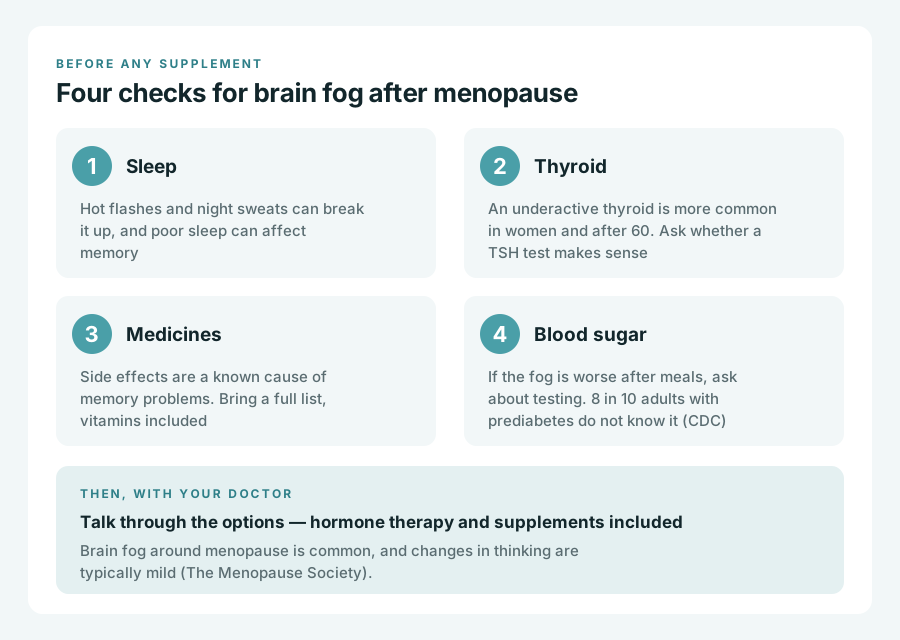
- Sleep. The Menopause Society notes that up to 80% of women have hot flashes or night sweats at some point in the transition. The National Institute on Aging says a lack of quality sleep can lead to problems with memory.
- Thyroid. MedlinePlus lists being a woman and being older than 60 among the risk factors for an underactive thyroid, with symptoms that can include fatigue and depression. A TSH blood test is one of the tools used to check.
- Medicines. The National Institute on Aging lists medication side effects among the causes of memory problems. If you take several, our checklist for people on several medicines covers what to ask.
- Movement and routine. Cleveland Clinic’s women’s health experts suggest enough sleep, balanced meals, a regular exercise routine and less multitasking.
If the fog is worse after meals
Blood sugar is one more cause worth a quick check. The CDC estimates that 8 in 10 adults with prediabetes do not know they have it. Our guide to brain fog after eating covers the everyday steps and the test to ask about.
Is Hormone Therapy Worth Asking About?
It is a fair question for your doctor, because hormone therapy is a medical treatment and the decision belongs to you both; this page does not recommend for or against it. Here is what The Menopause Society’s 2022 position statement, published under its former name, The North American Menopause Society, says — so you can walk in informed.
It calls hormone therapy the most effective treatment for hot flashes and night sweats, and says its risks depend on the type, dose, how long it is used, how it is taken and when it is started — so treatment should be individualized. On thinking specifically, it states that in the absence of more definitive findings, hormone therapy is not recommended at any age to prevent or treat a decline in cognitive function.
If brain fog is part of a wider picture of menopause symptoms, talk with your doctor about the options.
Which Supplements Were Tested In Women Past Menopause?
Only some were, and the middle column shows which. It asks one question of the research we could find and verify: were women past menopause the people being studied? “Adults in general” does not mean an ingredient fails for women after menopause. It means the question has not yet been asked in that group specifically.
| Ingredient | Tested in women past menopause? | What the studies found |
|---|---|---|
| Soy isoflavones | Yes | In a 2020 meta-analysis of 16 trials, 1,252 of the 1,386 participants were postmenopausal women; isoflavones slightly improved overall thinking and memory scores. The NIH’s complementary health center still calls the effect on cognition uncertain, because results conflict. |
| Resveratrol | Yes | A 24-month trial in 125 postmenopausal women aged 45 to 85 found better overall cognitive scores on 75 mg twice a day than on placebo. A 2025 meta-analysis of 10 trials in postmenopausal women found no significant effect on cognition or memory measures. |
| Creatine | Yes, one small trial | An 8-week 2025 trial in 36 women in or past menopause found faster reaction time on one dose of creatine hydrochloride. In a 2023 meta-analysis of adults in general, the memory result was clearest at ages 66 to 76. |
| Schisandra | Yes, but not for memory | A 2020 trial in 45 postmenopausal women measured muscle strength and fatigue over 12 weeks, not thinking. |
| Omega-3 (DHA and EPA) | Adults in general | A 2025 review of omega-3s and the menopause transition called the evidence relatively sparse, noted that much of the menopause-specific cognitive work comes from animal studies, and described trials in people as mixed. |
| Lion’s mane | Adults in general | A 2026 preprint, not yet peer reviewed, reported better visual attention and working memory after 8 weeks in 109 adults aged 40 to 75 with self-reported cognitive difficulty. A 2025 single-dose study in 18 adults aged 18 to 35 found no overall effect. |
| Bacopa | Adults in general | A 2025 trial in 101 adults aged 40 to 70 with memory and attention complaints found no difference from placebo on cognitive tests after 12 weeks, with less stress reactivity reported. A 2026 network meta-analysis in healthy adults reported working-memory benefits. |
| Magnesium | Adults in general | A 2024 trial of magnesium L-threonate in 80 adults aged 35 to 55 with sleep problems measured sleep, mood and alertness rather than memory. |
| Vitamin B12 | Older adults in general | The NIH Office of Dietary Supplements says trials in older adults found no improvement in thinking from B12 alone or with other B vitamins. A low level is a different matter: it can cause fatigue and numbness or tingling in the hands and feet, and a blood test can find it. |
| Multivitamin | Adults in general | A 3-year trial in 3,562 adults aged 60 and older found better word-recall scores on a daily multivitamin than on placebo. |
Every study is listed in References. Not a complete list of ingredients, and not medical advice.
Read across the rows and a pattern appears. The two ingredients with the most research in women past menopause, soy isoflavones and resveratrol, have mixed results even there. Ingredients often found in memory formulas — bacopa, lion’s mane, omega-3 and magnesium — have been studied mainly in mixed groups of adults, some of them on sleep or stress rather than memory.
Creatine is the exception worth a footnote: one small trial in women in or past menopause, and a memory result in older adults generally. Our MemoryFuel review covers that research in more detail.
Vitamin B12: a blood test before a bottle
B12 is the one row where a test can give a clear answer. The NIH Office of Dietary Supplements lists older adults, people with digestive conditions such as celiac or Crohn’s disease, people who have had gastrointestinal surgery, and people on vegetarian or vegan diets among those most likely to run low. Long-term use of metformin or acid-reducing proton pump inhibitors is another cause. Pernicious anemia, the most common cause of clear-cut deficiency, is more common in women.
Low B12 can cause fatigue, palpitations, and numbness or tingling in the hands and feet — and those nerve symptoms can appear without anemia. A serum or plasma B12 level is the usual test. We found no recent trial of B12 on thinking in women past menopause, so the table relies on the trials in older adults. Neither formula below names vitamin B12; our guide to vitamins for brain fog covers the tests to ask for.
Who Should Check Before Starting?
Several medicines are worth raising with a pharmacist before a brain formula. The ingredients named here appear in the two formulas below. Bring the label.
- Thyroid hormone, such as levothyroxine. A StatPearls review notes bacopa taken with thyroid hormone may lead to too much thyroid hormone. The FDA-approved levothyroxine label says not to take it within 4 hours of calcium or iron supplements — worth checking on any formula label that lists them.
- Osteoporosis tablets (bisphosphonates). The NIH Office of Dietary Supplements advises taking magnesium at least 2 hours before or after them.
- Cholinesterase inhibitors or heart-rate medicines. Memorial Sloan Kettering notes huperzine A may add to the side effects of cholinesterase inhibitors such as donepezil, and may lower heart rate with calcium channel blockers or beta blockers.
- Medicines broken down by liver enzymes. Memorial Sloan Kettering notes gotu kola inhibited several of these enzymes in lab studies, with clinical relevance not yet determined — a question for your pharmacist.
Never stop, reduce or change a prescription to make room for a supplement.
What Should You Look For Before You Buy?
If you have decided a formula is worth trying, these are the things to confirm before you order.
- Ingredients tested in women past menopause. The table above shows which studies included them, and which were tested only in adults in general.
- No stimulants, if sleep is part of the picture. Check the label for caffeine sources before you order.
- An amount for each ingredient, or a company that will tell you. It lets your doctor read the label against the research.
- A guarantee that covers several weeks. Most trials ran for weeks to months, so check the refund terms first.
Which Formulas Are Built On Ingredients From The Table?
If you have worked through the checks above and want to discuss a formula with your doctor, two on this site are built on ingredients from the table.
CogniSurge is a stimulant-free capsule built on bacopa and lion’s mane, with schisandra, gotu kola and shilajit alongside — a fit if you would rather avoid stimulants. NeuroZoom names DHA, magnesium and a broad base of vitamins and minerals among its 35 ingredients, alongside bacopa and huperzine A. Neither publishes the amount of each ingredient, which the full reviews explain.
Two formulas worth a closer look
Two formulas built on ingredients from the table
If you want to try a formula alongside your doctor’s advice, these two are made without stimulants and built on ingredients from the table — each with a money-back guarantee.

CogniSurge
Capsules
Two capsules a day with no stimulants, built on bacopa and lion’s mane — the two ingredients in it with human trials on memory and attention.
- Readers who want to avoid caffeine
- Anyone who wants a long refund window
Covered by a 365-day money-back guarantee
Before you start · Mention bacopa if you take thyroid medicine or a sedative.
See CogniSurge on the official siteRead our CogniSurge review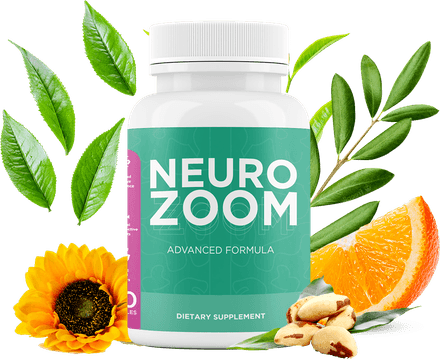
NeuroZoom
Capsules
A capsule that names DHA, magnesium and a broad vitamin and mineral base, plus bacopa and phosphatidylserine, with no stimulants.
- Readers who want vitamins, magnesium and memory nutrients in one capsule
- Once-a-day routines
Covered by a 60-day money-back guarantee
Before you start · Huperzine A matters with cholinesterase inhibitors and heart-rate medicines. If you already take a multivitamin, compare the two labels.
See NeuroZoom on the official siteRead our NeuroZoom reviewListed in no particular order. We publish no scores or rankings.
When Should You See A Doctor?
See your doctor if brain fog is getting worse rather than holding steady, if it is affecting your work or daily life, or if people close to you have noticed. Cleveland Clinic’s neurologist puts it simply: it is always OK to check with a health care provider if you are worried about your memory. The same appointment is a good time to ask about sleep, thyroid, medicines and your menopause options.
Ready to compare? Go back to the two formulas above, or read the full reviews of CogniSurge and NeuroZoom.
Frequently asked
What works for menopause brain fog?
Start with what affects thinking at any age: enough sleep, regular exercise, balanced meals, and a check of thyroid and medicines with your doctor. Cleveland Clinic’s women’s health experts add cutting down on multitasking. Hormone therapy and supplements are both conversations to have with your doctor, who can weigh them against your health history.
What is the best supplement for post-menopause brain fog?
No single supplement has strong evidence in women past menopause. Soy isoflavones and resveratrol have been tested in postmenopausal women, with mixed results. Ingredients common in memory formulas, such as bacopa, lion’s mane, omega-3 and magnesium, have mostly been studied in adults in general. Ask your doctor or pharmacist before starting any of them.
Does brain fog go away after menopause?
It often holds steady or eases. The Menopause Society describes brain fog during perimenopause as very common, with changes in thinking that are typically mild and within the limits of normal, and a Cleveland Clinic neurologist notes that menopause-related brain fog tends to stay stable or improve. If yours is getting worse, see your doctor.
Why do I struggle to find words during menopause?
Trouble finding words is a common part of it. The Menopause Society lists difficulty remembering words, names and numbers among the symptoms of brain fog, and Cleveland Clinic explains that low estrogen tends to affect verbal memory, such as recalling words and names. Poor sleep from night sweats can make it harder.
Can I take a brain supplement with thyroid or osteoporosis medicine?
Ask your pharmacist first. A StatPearls review notes bacopa taken with thyroid hormone may lead to too much thyroid hormone, and the levothyroxine label says not to take it within 4 hours of calcium or iron supplements. The NIH Office of Dietary Supplements advises taking magnesium at least 2 hours apart from osteoporosis tablets called bisphosphonates.
Does vitamin B12 help menopause brain fog?
It depends on whether you are low. The NIH Office of Dietary Supplements says low B12 can cause fatigue and numbness or tingling in the hands and feet, and that trials in older adults found no improvement in thinking from extra B12. We found no recent trial in women past menopause. A blood test shows whether you are low, and the dose is your doctor’s decision.
Does magnesium help perimenopause brain fog?
In the research we could verify, not directly. The magnesium trial in the table enrolled adults aged 35 to 55 with sleep problems and measured sleep, mood and alertness rather than memory. If you want to try it, the NIH Office of Dietary Supplements advises spacing it at least 2 hours from bisphosphonates, and your pharmacist can check your other medicines.
References
- Perimenopause — The Menopause Society — 2025
- The 2022 hormone therapy position statement of The North American Menopause Society — Menopause — 2022
- Menopause Memory Loss: Should You Be Worried? — Cleveland Clinic — 2025
- Omega-3 fatty acids, brain health and the menopause — Post Reproductive Health — 2025
- Sleep and Older Adults — National Institute on Aging — 2025
- Memory Problems, Forgetfulness, and Aging — National Institute on Aging — 2023
- Hypothyroidism — MedlinePlus, National Library of Medicine — 2026
- Prediabetes: Could It Be You? — Centers for Disease Control and Prevention — 2026
- Effects of soy isoflavones on cognitive function: a systematic review and meta-analysis of randomized controlled trials — Nutrition Reviews — 2020
- Soy: Usefulness and Safety — NIH National Center for Complementary and Integrative Health — 2025
- Long-term effects of resveratrol on cognition, cerebrovascular function and cardio-metabolic markers in postmenopausal women: A 24-month randomised, double-blind, placebo-controlled, crossover study — Clinical Nutrition — 2020
- Effects of resveratrol on postmenopausal women: a systematic review and meta-analysis — Frontiers in Pharmacology — 2025
- The Effects of 8-Week Creatine Hydrochloride and Creatine Ethyl Ester Supplementation on Cognition, Clinical Outcomes, and Brain Creatine Levels in Perimenopausal and Menopausal Women (CONCRET-MENOPA): A Randomized Controlled Trial — Journal of the American Nutrition Association — 2025
- Effects of creatine supplementation on memory in healthy individuals: a systematic review and meta-analysis of randomized controlled trials — Nutrition Reviews — 2023
- Effect of Schisandra chinensis Extract Supplementation on Quadriceps Muscle Strength and Fatigue in Adult Women: A Randomized, Double-Blind, Placebo-Controlled Trial — International Journal of Environmental Research and Public Health — 2020
- A randomized, double-blind, placebo-controlled study evaluating the impact of Hericium erinaceus (Lion’s Mane) on cognitive performance and subjective wellbeing — medRxiv (preprint) — 2026
- Acute effects of a standardised extract of Hericium erinaceus (Lion’s Mane mushroom) on cognition and mood in healthy younger adults: a double-blind randomised placebo-controlled study — Frontiers in Nutrition — 2025
- The Effects of a Bacopa monnieri Extract (Bacumen®) on Cognition, Stress, and Fatigue in Healthy Adults: A Randomized, Double-Blind, Placebo-Controlled Trial — Clinical Drug Investigation — 2025
- Comparative effects of Bacopa monnieri and Ginkgo biloba on cognitive functions: A systematic review and network meta-analysis — Phytomedicine — 2026
- Magnesium-L-threonate improves sleep quality and daytime functioning in adults with self-reported sleep problems: A randomized controlled trial — Sleep Medicine: X — 2024
- Multivitamin Supplementation Improves Memory in Older Adults: A Randomized Clinical Trial — The American Journal of Clinical Nutrition — 2023
- Bacopa monnieri — StatPearls, NCBI Bookshelf — 2023
- SYNTHROID (levothyroxine sodium) Prescribing Information — U.S. Food and Drug Administration — 2024
- Magnesium: Fact Sheet for Health Professionals — NIH Office of Dietary Supplements — 2026
- Vitamin B12: Fact Sheet for Health Professionals — NIH Office of Dietary Supplements — 2025
- Huperzia serrata (Huperzine A) — Memorial Sloan Kettering Cancer Center, About Herbs — 2022
- Gotu Kola — Memorial Sloan Kettering Cancer Center, About Herbs — 2022
Disclosure
All content is for informational purposes only and is not a substitute for professional medical advice, diagnosis, or treatment. Each product covered is a dietary supplement, not a prescription drug, and statements about it have not been evaluated by the U.S. Food and Drug Administration. Results vary with individual health status, consistency of use, and lifestyle. This page contains affiliate links — if you buy through them we may earn a small commission at no additional cost to you. Read our disclosure and our editorial policy.