
Creatine for Brain Fog After 40: What the Studies Measured
You keep hearing that creatine is good for the brain, not only for the gym. Here is what the studies in older adults and in women actually measured, what to check first, and where a scoop in water fits.
Quick answer
Possibly, but the research is early. The brain uses creatine for energy, as muscle does. In pooled trials, memory improved in adults 66 to 76, not in younger groups, and one small trial in women 40 to 60 found faster reaction time. Check sleep and vitamin B12 first. Two formulas, one with creatine, follow below.
It started as a joke at the gym, or a clip on a podcast: creatine, the powder in the protein aisle, is supposed to be good for the brain now. You did not think much of it. Then came another afternoon of reading the same email twice, of losing the word halfway through a sentence, of a tiredness that coffee no longer seems to touch.
You are somewhere between 40 and 65. Maybe the fog arrived with the hormone changes of these years, maybe it settles in after lunch, maybe both. You would happily stir something into a glass of water each morning, if it were worth it. What you do not want is to buy a tub on the strength of a headline.
So here is the headline taken apart: what creatine does in the brain, what to rule out before you try it, and what the studies measured, in whom, and how much they used.
Further down, we look at two formulas for this reader: MemoryFuel, a daily powder that includes creatine, and Neuro Serge, a botanical capsule — each with a money-back guarantee.
What Does Creatine Do In The Brain?
Creatine is best known as a muscle supplement, and in the brain it does the same job: cells use it to keep their energy supply steady when demand spikes.
The brain is an energy-hungry organ. A 2021 review in Nutrients notes that the brain accounts for up to 20% of the body’s energy use, and that creatine may help keep its energy supply steady at times of rapid turnover, such as complex mental tasks or a night without sleep.
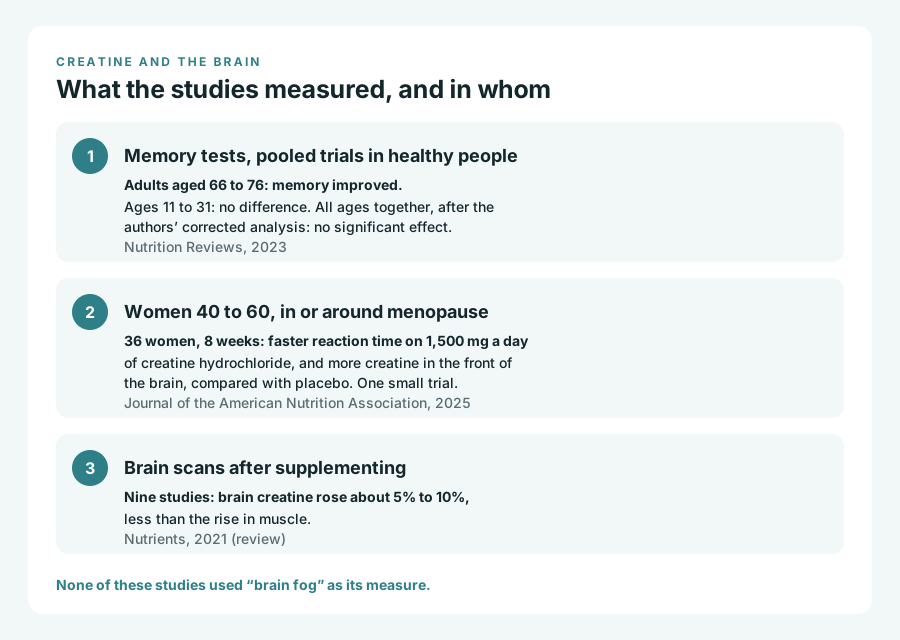
The brain makes some of its own, and takes in less from supplements. The same review explains that the brain can produce creatine, and that the barrier between blood and brain lets it through only to a limited degree. In nine studies that scanned the brain before and after supplementing, brain creatine rose by about 5% to 10%, less than the rise seen in muscle. The protocols in those studies used 2 to 20 grams a day, for one to eight weeks.
Diet sets the starting point. Creatine in food comes from meat, fish and poultry, and the review notes that cognitive function has been shown to improve in vegetarians after supplementing. Our MemoryFuel comparison page covers where creatine and the other everyday nutrients come from in food.
That is the reasoning behind the headlines. Whether it translates into clearer days for you is what the trials try to answer, and they come after a few checks.
What Should You Check Before Trying Creatine?
Brain fog at this age has common, checkable causes. None of them costs a tub of anything to look into, and each one changes what a supplement can do for you.
1. Your sleep
The National Heart, Lung, and Blood Institute notes that sleep deficiency can cause problems with learning, focusing and reacting, and with remembering things and making decisions. It adds that you may take longer to finish tasks and make more mistakes. If hot flashes, a partner’s snoring or a late screen are cutting your nights short, that comes first.
2. Your vitamin B12
This is the “creatine or B12” question, and B12 goes first because it can be measured. MedlinePlus, the National Library of Medicine’s health site, lists fatigue and, with a long-running deficiency, problems concentrating among the signs of low B12. It names long-term use of metformin, long-term antacids and heartburn medicines, and a strict vegetarian diet among the causes. A serum B12 blood test is how a doctor checks. Our guide to vitamins for brain fog lists the tests to ask for.
3. When the fog arrives
If it settles in an hour or two after meals, blood sugar is one cause worth ruling in or out, and our article on brain fog after eating covers what to try first. If it arrived with irregular periods or hot flashes, our guide to brain fog after menopause sets out which supplement studies included women at this stage.
4. Your list of medicines
Write down every prescription, vitamin and supplement you take. Any new formula is easier to judge once your pharmacist has seen the full list, so bring it, with the label of anything you are considering.
What Did The Creatine Studies Measure?
The studies below measured memory tests, reaction time and creatine levels in the brain; none of them used “brain fog” as its measure. Those are the closest things to fog that research can count.
Memory in older adults: the clearest result
A systematic review and meta-analysis in Nutrition Reviews, published in 2023, pooled eight randomized trials of creatine and memory in healthy people aged 11 to 85, 225 participants in all. Doses ranged from 2.2 to 20 grams a day, and the trials lasted from five days to 24 weeks.
The same authors later corrected their analysis, after a letter pointed out that some participants had been counted more than once. In the corrected version, published in the same journal in 2023, adults aged 66 to 76 still improved on memory compared with placebo. People aged 11 to 31 showed no difference, and across all ages together the effect was no longer statistically significant. The trials were few and small.
For a reader in her forties or fifties, that leaves an honest gap: the age group with the clear result is older than you, and the younger groups did not show one. No trial in this analysis was run in adults aged 40 to 65 specifically.
Women 40 to 60: one small trial
The closest study to this reader is CONCRET-MENOPA, published in 2025 in the Journal of the American Nutrition Association. It enrolled 36 healthy women, average age 50, in or around menopause, and gave them one of three creatine products or a placebo for eight weeks. The middle dose, 1,500 mg a day of creatine hydrochloride, did better than placebo on reaction time and raised creatine levels in the front of the brain. The authors report that all the products were well tolerated.
Two details matter when you read a label afterwards. The trial used creatine hydrochloride, a different form from the creatine monohydrate behind most creatine research, at amounts far below the grams used in the memory trials. And with nine women or so per group over eight weeks, it is a first look rather than an answer.
Under strain, and in younger adults
Some of the most cited creatine results come from people kept awake all night. Our article on mental fatigue without stimulants covers that research, so it is not repeated here. The 2021 review above notes that creatine’s effects seem more pronounced under stresses such as sleep deprivation, and that the findings in older people are conflicting.
How Is Creatine Taken, And What Should You Expect?
Creatine is usually sold as a powder, stirred into water or another drink once a day. The studies above used anything from under a gram to 20 grams a day.
- Water weight. A 2025 review of creatine’s safety questions in Frontiers in Nutrition notes that a high “loading” amount, 20 grams a day for five days, can add 1 to 3 kg of body weight, mostly water held inside the muscles.
- Stomach upset. The same review describes it as dose-dependent, and suggests keeping single doses at 5 grams or less, or splitting larger amounts.
- Kidney tests. The review found no harm to kidney function in healthy people in the studies, and notes that creatine can raise blood creatinine, a common kidney test, without the kidneys being affected. Tell your doctor you take it before blood work.
- Time. The trials ran from days to 24 weeks. A fair window to judge any formula is 4 to 12 weeks, and our guide to how long memory supplements take to work explains why.
What Should You Look For Before You Buy?
- The form of creatine. Monohydrate is the form behind most of the research; the women’s trial used hydrochloride. A label that names the form tells you which body of research applies.
- An amount per serving, if matching the studies matters to you. It lets you set the label beside the 1.5 grams or the several grams a day the trials used.
- What else is in the scoop. If the formula adds vitamin B12, vitamin D or magnesium, check it against any multivitamin or single vitamin you already take.
- A routine you will keep. A powder in your morning glass of water, or a capsule with breakfast. The trials ran for weeks to months.
- A refund window long enough to judge it. Note the guarantee and pick the week you will decide.
Which Formulas Could Fit This Routine?
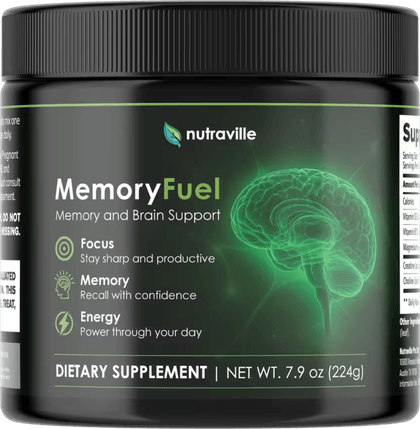
MemoryFuel is the one with creatine. It is a powder from Nutraville that names five ingredients, each with its form: creatine monohydrate, vitamin B12 as methylcobalamin, vitamin D3 as cholecalciferol, magnesium as magnesium glycinate, and choline as dl-choline bitartrate. The serving is one scoop a day stirred into 6 to 8 ounces of water, and a tub is sold as a one-month supply. No amount is published for any ingredient, so the creatine in a scoop cannot be set beside the doses above; the tub states 224 grams, about 7.5 grams of powder a day by the maker’s own numbers, for all five together. The guarantee runs 90 days.
Neuro Serge contains no creatine. It is here for readers who would rather start with something else, or whose fog tends to follow meals. It is a capsule built on six named botanicals: olive leaf, cassia cinnamon, deglycyrrhizinated licorice, green tea, grape seed and bilberry. Its review groups them as a vascular and metabolic panel, and four of the six have human trials that measured cognition. The maker describes it as stimulant-free and once daily. It is a proprietary blend, so no amount is published, and the guarantee runs 180 days.
As their reviews explain, there is no published trial on either exact combination.
Two formulas worth a closer look
Two formulas for fog after 40
One puts creatine in a daily glass of water, the other is a botanical capsule — each with a money-back guarantee.
MemoryFuel
Powder
A daily scoop in water with creatine monohydrate, the form behind most creatine research, plus vitamin B12, vitamin D3, magnesium and choline, each with its form named.
- Readers who want creatine in their routine
- Anyone who would rather drink than swallow capsules
Covered by a 90-day money-back guarantee
Before you start · With kidney disease, ask about creatine and magnesium first. Magnesium needs spacing from some antibiotics and osteoporosis tablets.
See MemoryFuel on the official siteRead our MemoryFuel review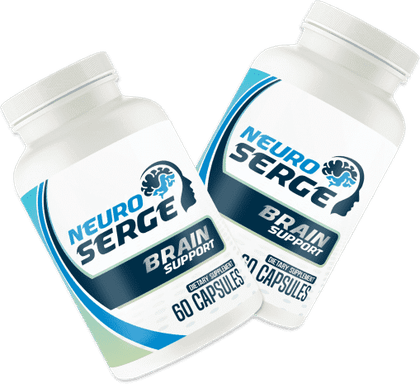
Neuro Serge
Capsules
A once-daily capsule of six botanicals, including olive leaf, cassia cinnamon, grape seed and bilberry, four of which have trials that measured cognition, with no stimulants.
- Readers whose fog tends to follow meals
- Anyone who wants a long refund window
Covered by a 180-day money-back guarantee
Before you start · Green tea and cassia cinnamon are worth raising if you take medicine for blood pressure, cholesterol or blood sugar.
See Neuro Serge on the official siteRead our Neuro Serge reviewListed in no particular order. We publish no scores or rankings.
Who Should Check Before Taking Creatine?
Take the label, or a photo of it, to your pharmacist or doctor if any of these apply.
- You have kidney disease, or are at risk of it. The 2025 review in Frontiers in Nutrition recommends close monitoring during creatine use for these people, because data are limited. The MemoryFuel review also names magnesium to ask about.
- You take certain antibiotics or osteoporosis tablets. The MemoryFuel review notes that magnesium can affect how some of them are absorbed, so timing may matter.
- You take nadolol, atorvastatin or raloxifene. The NIH’s National Center for Complementary and Integrative Health notes that green tea can lower blood levels of these medicines, and asks anyone taking medicine to talk with their provider before green tea supplements.
- You take diabetes medicine. The same center says herbal supplements such as cinnamon can cause unwanted side effects when used with conventional diabetes drugs. It also notes that cassia cinnamon contains coumarin, which might cause or worsen liver disease, so mention liver disease too.
- You are treated for blood pressure. The Neuro Serge review names licorice as the ingredient to raise.
- You take metformin or a heartburn medicine long term. MedlinePlus names both among the causes of low B12, so ask about a B12 test whatever you decide about a formula.
Never stop, reduce or change a prescription to make room for a supplement.
When Should You See A Doctor About Brain Fog?
Book an appointment if the fog is getting worse month by month, if it came on suddenly, if it is affecting work or daily life, or if someone close to you has noticed it. Foggy days in your forties and fifties are common, and many have everyday causes.
Mention numbness or tingling in the hands or feet, or ongoing tiredness, too: MedlinePlus lists both among the signs of a long-running B12 deficiency, which a blood test can check.
Ready to compare? Go back to the two formulas above, or read the full reviews of MemoryFuel and Neuro Serge.
Frequently asked
Does creatine help brain fog in older adults?
No trial has measured brain fog by that name. What has been measured is memory: in pooled trials of healthy people, memory improved in adults aged 66 to 76, while younger groups showed no difference. The trials were few and small. Sleep, a vitamin B12 check and your list of medicines are worth looking at first.
Is creatine good for memory in women over 50?
There is one small trial in this group. In 2025, 36 women aged 40 to 60, in or around menopause, took creatine hydrochloride or a placebo for eight weeks. At 1,500 mg a day, reaction time got faster and creatine rose in the front of the brain. It was short and small, and a larger trial would be needed to say more.
Creatine or vitamin B12 for brain fog: which comes first?
B12, because it can be tested. MedlinePlus lists problems concentrating and fatigue among the signs of a long-running B12 deficiency, and names long-term metformin, heartburn medicines and a strict vegetarian diet among the causes. A blood test tells you where you stand. Creatine has no such test; its case rests on trials.
How much creatine did the studies use, and for how long?
It varied widely. The memory trials used 2.2 to 20 grams a day, for anywhere from five days to 24 weeks. The trial in women 40 to 60 used much less, 750 to 1,500 mg a day of creatine hydrochloride, for eight weeks. A fair window to judge any formula is 4 to 12 weeks.
Does creatine cause bloating or weight gain?
It can add water weight. A 2025 review notes that 20 grams a day for five days can add 1 to 3 kg, mostly water held in the muscles. Stomach upset depends on the dose, and the review suggests keeping single doses at 5 grams or less.
Is creatine hard on the kidneys?
In healthy people, studies have not found harm to kidney function, according to a 2025 review. If you have kidney disease or are at risk of it, the authors recommend close monitoring, because data are limited, so ask your doctor first. Creatine can also raise blood creatinine, a common kidney test, so tell your doctor before blood work.
References
- Effects of creatine supplementation on memory in healthy individuals: a systematic review and meta-analysis of randomized controlled trials — Nutrition Reviews — 2023
- Author’s reply: Letter to the Editor: Double counting due to inadequate statistics leads to false-positive findings in “Effects of creatine supplementation on memory in healthy individuals” — Nutrition Reviews — 2023
- The Effects of 8-Week Creatine Hydrochloride and Creatine Ethyl Ester Supplementation on Cognition, Clinical Outcomes, and Brain Creatine Levels in Perimenopausal and Menopausal Women (CONCRET-MENOPA): A Randomized Controlled Trial — Journal of the American Nutrition Association — 2025
- Creatine Supplementation and Brain Health — Nutrients — 2021
- A short review of the most common safety concerns regarding creatine ingestion — Frontiers in Nutrition — 2025
- Vitamin B12 deficiency anemia — MedlinePlus, National Library of Medicine — 2026
- Sleep Deprivation and Deficiency: How Sleep Affects Your Health — National Heart, Lung, and Blood Institute — 2022
- Green Tea — NIH National Center for Complementary and Integrative Health — 2025
- Diabetes and Dietary Supplements: What You Need To Know — NIH National Center for Complementary and Integrative Health — 2023
Disclosure
All content is for informational purposes only and is not a substitute for professional medical advice, diagnosis, or treatment. Each product covered is a dietary supplement, not a prescription drug, and statements about it have not been evaluated by the U.S. Food and Drug Administration. Results vary with individual health status, consistency of use, and lifestyle. This page contains affiliate links — if you buy through them we may earn a small commission at no additional cost to you. Read our disclosure and our editorial policy.