
Reading Memory Supplement Reviews: What Forums and Ratings Can Tell You
You have been let down by a bottle before, so now you read what other people say first. Here is what a forum thread or a rating can tell you, what it cannot, and the facts you can check for yourself.
Quick answer
Forum threads and star ratings tell you how some buyers felt, not whether a formula caused it or whether the review is genuine. The FTC says you cannot reliably spot a fake just by looking. Lean on what you can check yourself: the label, the company named on it, the guarantee and the checkout. Two formulas follow below.
You have done the reading before. A sales page, a few glowing stories, a bottle or three, and at the end of it nothing you could point to. So this time you went looking for other people first: a long thread on Reddit, a row of stars, a page of comments under a video.
And it did not settle anything. One person swears by a formula, the next says it did nothing, a third is selling something else. You are not trying to be cynical. You just want to know which of these voices to listen to, and what you can find out without taking anyone’s word for it.
This guide sorts that out. It will not tell you which bottle works. It will show you what a review can carry, where it stops, and which facts are printed on the label and the checkout page, the same for everyone.
Further down, we look at two formulas whose basics you can check before you buy: MemoVolt and NovuBrain+ — each with a money-back guarantee.
What Can A Review Actually Tell You?
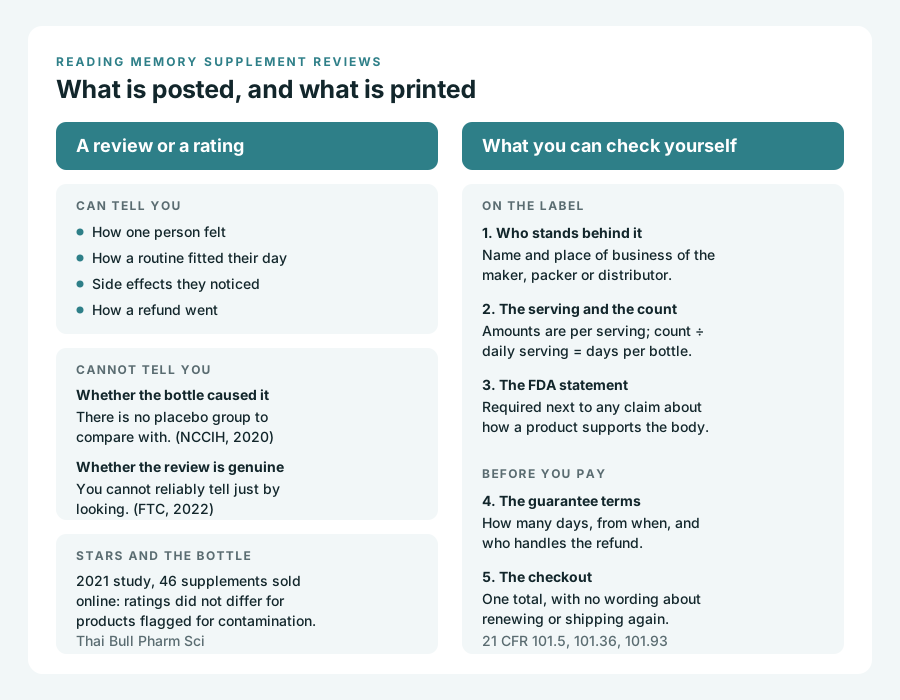
A forum post, a star rating and a testimonial are all the same kind of thing: one person’s account of their own experience. That has real value. A review can tell you how a routine fitted into someone’s morning, whether the capsules were easy to swallow, whether they noticed an upset stomach, and how a refund request went.
What it cannot tell you is whether the bottle caused what they felt. The NIH’s National Center for Complementary and Integrative Health describes the placebo effect as a beneficial health outcome resulting from a person’s anticipation that an intervention will help. That is why the standard way to test anything in people is the randomized, placebo-controlled trial, in which volunteers are assigned at random to the real product or to a look-alike with nothing active in it. A single review has no placebo group. Neither does a thread of a thousand.
There is a practical side to this as well. Someone who started a formula in the same month they began sleeping better, or retired, or stopped a medicine, has no way of telling which change made the difference. Neither do you, reading about it.
The Federal Trade Commission makes the same point from the advertiser’s side. Its guidance for health products says it is not enough that a testimonial represents the honest opinion or experience of the person giving it: advertisers also need scientific evidence that the product will work for buyers as it did for that person. An honest review and a reliable result are two different things.
Can You Tell A Fake Review Just By Looking?
The FTC’s consumer advice says you cannot count on it: some reviews are fake, deceptive or manipulated, and you should not assume that, just by looking, you can spot the difference between a real review and a fake one.
Since October 2024, a federal rule on consumer reviews and testimonials has been in force. The FTC announced it in August 2024, and it prohibits, among other things:
- Fake reviews and testimonials, including ones attributed to people who do not exist or who never used the product.
- Paying or rewarding people for reviews that express a particular sentiment, positive or negative.
- Presenting a website the business controls as one that gives independent reviews.
- Suppressing reviews through unfounded legal threats or intimidation, or presenting the reviews on display as most or all of those submitted while negative ones are being held back.
The rule lets the FTC seek civil penalties against businesses that break it knowingly, and in December 2025 the agency sent letters reminding companies that creating, buying or posting fake reviews, or rewarding only positive ones, may lead to enforcement and fines. The rule gives the FTC a way to penalize fakes. It does not change what an honest review can tell you.
One more thing worth knowing about anything you read, this page included: some writers are paid when you buy. This site may earn a commission when you buy through the buttons on this page, as the disclosure at the end of it says. It publishes no score, no stars and no ranking for any product, and the two formulas below are listed in no particular order.
How Should You Read A Forum Thread Or A Rating?
With the FTC’s advice and a few questions of your own, read them for the right things. None of this means reviews are useless.
- Read several sources. The FTC suggests looking at a variety of them and noticing whether each one is independent or sponsored.
- Check the dates. The FTC notes that a burst of reviews over a short period can sometimes mean the reviews are fake.
- Look at the reviewer. Has the person written other reviews? The FTC says an account that seems to exist only to review one product may be fake.
- Read for detail, not for the verdict. How long did they take it? How many capsules a day? What else changed at the same time, and what else do they take? A post that says “ten days, nothing” is describing a stretch far shorter than the trials in this category used.
- Read the negative ones too, with the same care. They are often where side effects and refund experiences show up. The FTC also notes that a company may sometimes post fake negative reviews to harm a competitor.
And a rating is an average of feelings, not a test of the bottle. A 2021 study in the Thai Bulletin of Pharmaceutical Sciences looked at 46 supplements sold on two online marketplaces, with 288 ratings and 496 written reviews. Some of those products had been flagged by government laboratory testing for contamination. Their ratings were no different from the rest, and the written reviews could not tell the two groups apart. It was a small study, in one country, but the lesson travels: stars did not show what was in the bottle.
What Does A Trial Tell You That A Review Cannot?
A trial answers the one question a review cannot: compared with what? Here is what a recent one on bacopa, an ingredient common in memory formulas, actually reports.
In a 2025 trial in Clinical Drug Investigation, 101 adults aged 40 to 70 with self-reported memory and attention problems took 300 mg of bacopa extract a day for 12 weeks, or a placebo; 87 finished. There were no differences between the groups on verbal learning, attention and working memory, the main questions. The bacopa group did report greater drops in stress reactivity and in fatigue.
Notice what that gives you that no thread can: who was studied, how much they took, for how long, what was measured, and compared with what. A result like that can differ from what you read online without either one being dishonest. The trial is an average across a group against a placebo; a post is one person without one.
Two cautions keep this fair. A trial on an ingredient is not a trial on a finished formula, and for most formulas sold direct to consumers there is no published trial on the exact combination. Our guide to whether memory supplements actually work goes ingredient by ingredient, and our guide to bacopa after 60 covers its wider research.
What Can You Check Yourself?
Five facts read the same for everyone, because they are printed on the bottle or shown before you pay. Reviews are other people’s experience.
The name on the label
Federal labeling rules require a packaged food, supplements included, to state the name and place of business of the manufacturer, packer or distributor. If the company named did not make the product, the name has to be qualified with wording such as “Manufactured for” or “Distributed by”. It tells you who stands behind the bottle.
The serving and the count
Amounts on a Supplement Facts panel are given per serving, and the serving size is printed at the top. Divide the count in the bottle by the daily serving and you know how long a bottle lasts — the number that turns a price into a cost per day. Our guide to comparing labels dose by dose walks through the panel line by line.
The FDA statement next to a claim
When a supplement label says how a product supports the body, the rules require this wording beside it: “This statement has not been evaluated by the Food and Drug Administration. This product is not intended to diagnose, treat, cure, or prevent any disease.” It is standard text on every supplement making such a claim, not a warning about one product. The FDA explains why: under federal law, it does not have the authority to approve dietary supplements before they are marketed, and manufacturers carry the first responsibility for meeting the safety standards.
The guarantee terms
How many days, counted from when, who handles the refund, and whether opened bottles count. Our guide to long money-back guarantees lists the terms to read before you order.
The checkout
One total, and no wording about renewing or shipping again, is what a one-time purchase looks like. Our guide to memory supplements with no auto-ship shows what to read next to the button.
What Should You Look For Before You Buy?
- Reviews that describe, not reviews that score. How long, how much, what changed, what side effects. Those details are worth more than the average.
- Ingredients with human research you can read. Who was studied, for how long and against what. A thread cannot give you that; a trial can.
- A label that tells you how long a bottle lasts. The count and the serving are enough to work out your cost per day.
- A refund window longer than your test. If you plan to judge at week eight or twelve, a guarantee that covers it lets you decide on your own experience rather than someone else’s.
- Every ingredient you need to raise with your doctor. Some plant compounds matter alongside prescriptions; see the section on who should check first.
Which Formulas Give You Facts You Can Check?
The two formulas below are here because each gives you concrete facts to read before you pay. They are not here to be compared with each other, and neither is ranked.
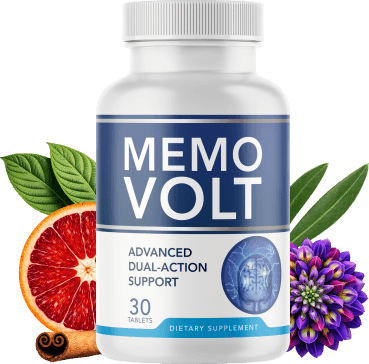
MemoVolt is sold direct by its manufacturer through its own site, taken as one a day with food. The label states 30 per bottle, so a bottle is a month. The sales page names ten ingredients — among them saffron, which has human trials on cognition, and berberine, Ceylon cinnamon and banaba, which were studied for how the body handles blood sugar — and publishes no amount for any of them. It is stimulant-free, and the guarantee runs 60 days.
NovuBrain+ comes as 60 capsules, two with breakfast, so a bottle lasts 30 days. The sales page names seven compounds, including bacopa standardised for bacosides, phosphatidylserine from sunflower, DHA omega-3 and huperzine A, and publishes no amounts. The maker describes it as caffeine-free, and it is sold as a one-time purchase: the sales page states there is no subscription and no auto-ship, and the checkout charges once. The guarantee runs 60 days.
As with finished formulas generally, there is no published trial on either exact combination. Each review sets out the research behind every ingredient.
Two formulas worth a closer look
Two formulas whose basics you can check
If you would rather rely on what is printed than on what is posted, each of these gives you concrete facts to read before you buy — each with a money-back guarantee.
MemoVolt
Capsules
One a day with food and 30 per bottle, built on ten named ingredients — saffron, which has human trials on cognition, alongside berberine, Ceylon cinnamon and banaba — with no stimulants.
- Readers who want a once-a-day routine
- Anyone already watching their blood sugar
Covered by a 60-day money-back guarantee
Before you start · Berberine and cinnamon are worth raising if you take diabetes medicine.
See MemoVolt on the official siteRead our MemoVolt review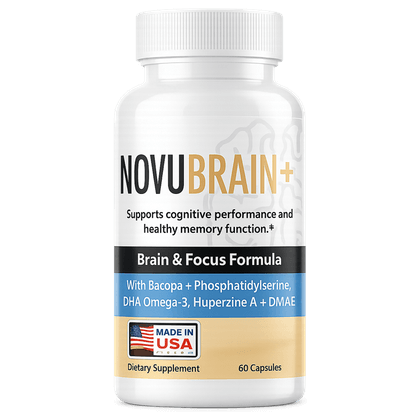
NovuBrain+
Capsules
Two caffeine-free capsules with breakfast, 60 to a bottle, combining bacopa, phosphatidylserine, DHA omega-3 and huperzine A, sold as a one-time purchase with no auto-ship.
- Readers who want several studied compounds in one routine
- Anyone who wants to pay once, with nothing to cancel
Covered by a 60-day money-back guarantee
Before you start · Huperzine A is worth raising if you take a memory medicine, a beta-blocker or a calcium channel blocker.
See NovuBrain+ on the official siteRead our NovuBrain+ reviewListed in no particular order. We publish no scores or rankings.
Who Should Check Before Starting?
Anyone who takes one of the medicines below should check with a doctor or pharmacist first. A review rarely mentions what else the writer takes, and that is exactly the question that matters most for you. Take the bottle, or a photo of the label, to your pharmacist or doctor if any of these apply.
- You take diabetes medicine. The NIH’s complementary health center says berberine may interact with some medicines, and that herbal supplements such as cinnamon can cause unwanted side effects when used with conventional diabetes drugs. The MemoVolt review also lists blood pressure medicine, a blood thinner and an antidepressant as reasons to ask first.
- You take a prescription memory medicine, a beta-blocker or a calcium channel blocker. Memorial Sloan Kettering describes huperzine A as an acetylcholinesterase inhibitor and advises against taking it with drugs such as donepezil, galantamine or rivastigmine, with beta-blockers or calcium channel blockers, which can slow the heart rate, or with medicines that block dopamine D2 receptors.
- You take a blood thinner or thyroid medicine. The NovuBrain+ review names DHA omega-3 for warfarin and other blood thinners, and bacopa for thyroid medication.
If something changes after you start a new formula, tell your doctor first. The FDA also accepts reports of a problem thought to be related to a supplement through the federal Safety Reporting Portal. A report there reaches the agency; a forum post does not. Never stop, reduce or change a prescription to make room for a supplement.
When Should You See A Doctor?
See a doctor when changes go beyond a slower name or a lost word now and then, which is common with age. Book an appointment if changes in memory or thinking are getting worse month over month, if they came on suddenly, if they affect daily life, or if someone close to you has noticed them. That is a conversation for a clinician, not a comment thread.
And if you notice a new symptom after starting any supplement, mention it at that visit, with the label in hand.
Ready to compare? Go back to the two formulas above, or read the full reviews of MemoVolt and NovuBrain+.
Frequently asked
Are memory supplement reviews on Reddit reliable?
They are useful for practical details: how a routine fitted into someone’s day, a side effect they noticed, how a refund went. They cannot show whether the product caused a change, because there is no placebo to compare with, and the Federal Trade Commission says you cannot reliably tell a real review from a fake one just by looking. Read them alongside the label and the research, not instead of them.
How can I tell if a supplement review is fake?
Often you cannot, and the FTC says so plainly. Its advice is to read several sources and notice which are independent and which are sponsored, to check how recent the reviews are, to treat a burst of reviews in a short period with caution, and to look at whether the reviewer has written other reviews. Since October 2024, a federal rule lets the FTC seek civil penalties against businesses that knowingly use fake reviews.
What is the best rated memory supplement?
This site does not rate or rank supplements. A rating is an average of how buyers felt, and in a 2021 study of 46 supplements sold online, ratings did not differ between products that laboratory testing had flagged for contamination and the rest. What you can compare yourself is the label, the research on each ingredient, the guarantee and the checkout terms.
Can reviews tell me whether a memory supplement works?
Not on their own. A review describes one person without a comparison group. Whether an ingredient does more than a placebo is the question a randomized, placebo-controlled trial is designed to answer, and those trials usually run 8 to 12 weeks. For most finished formulas, the trials are on the ingredients, not on the exact combination.
Where do I report a side effect from a supplement?
Tell your doctor first. The FDA also accepts reports of a problem thought to be related to a dietary supplement through the federal Safety Reporting Portal, and keeps the identity of the person reporting confidential. A report there reaches the agency; a forum post does not.
How long should I take a memory supplement before judging it?
Plan on weeks, not days. The 2025 bacopa trial described above ran for 12 weeks, and 4 to 12 weeks is a fair window for a formula in this category. Write down the date you start, what you want to notice, and when the guarantee ends.
References
- Federal Trade Commission Announces Final Rule Banning Fake Reviews and Testimonials — Federal Trade Commission — 2024
- 16 CFR Part 465 — Use of Consumer Reviews and Testimonials, Code of Federal Regulations — 2024
- How To Evaluate Online Reviews — Federal Trade Commission, Consumer Advice — 2022
- FTC warns businesses about fake reviews — Federal Trade Commission, Consumer Alert — 2025
- Health Products Compliance Guidance — Federal Trade Commission — 2022
- Placebo Effect — NIH National Center for Complementary and Integrative Health — 2020
- The Effects of a Bacopa monnieri Extract (Bacumen®) on Cognition, Stress, and Fatigue in Healthy Adults: A Randomized, Double-Blind, Placebo-Controlled Trial — Clinical Drug Investigation — 2025
- Will the Ratings and Reviews of Online Dietary Supplement Screen for Unsafe Products in the E-Marketplace — Thai Bulletin of Pharmaceutical Sciences — 2021
- 21 CFR 101.5 — Food; name and place of business of manufacturer, packer, or distributor (current text) — 2026
- 21 CFR 101.36 — Nutrition labeling of dietary supplements (current text) — 2026
- 21 CFR 101.93 — Certain types of statements for dietary supplements (current text) — 2026
- Questions and Answers on Dietary Supplements — U.S. Food and Drug Administration — 2026
- Diabetes and Dietary Supplements: What You Need To Know — NIH National Center for Complementary and Integrative Health — 2023
- Huperzia serrata — Memorial Sloan Kettering Cancer Center, About Herbs — 2022
Disclosure
All content is for informational purposes only and is not a substitute for professional medical advice, diagnosis, or treatment. Each product covered is a dietary supplement, not a prescription drug, and statements about it have not been evaluated by the U.S. Food and Drug Administration. Results vary with individual health status, consistency of use, and lifestyle. This page contains affiliate links — if you buy through them we may earn a small commission at no additional cost to you. Read our disclosure and our editorial policy.