
Taking Metformin? What to Check Before Berberine or Cinnamon
Both plants were studied for the same thing metformin does: blood sugar. That is the reason to ask before adding them, and it makes the conversation with your doctor short and specific. Here is what to bring.
Quick answer
Ask your prescriber first. The NIH’s complementary health center says berberine may interact with some medicines and that cinnamon with diabetes drugs can cause unwanted side effects. In trials, berberine added to metformin lowered blood sugar further. Bring the label, keep taking metformin as prescribed, and know the signs of low sugar. Two formulas, one with berberine and one without, are below.
Lunch is over, and by two o’clock the screen in front of you has gone soft at the edges. You already take metformin, morning and evening, and your last A1C was fine. Still, the afternoon fog keeps arriving on schedule.
Somewhere along the way you read about berberine, maybe described as a natural partner to metformin, and about cinnamon, which you may already stir into your coffee. Both sound gentle. Both are sold next to memory formulas. And the question you do not quite want to put to your doctor is whether you can add one without upsetting what is already working.
It is a good question, and it has a practical answer. Not a yes or a no from a website, but a short list of what to check, and what to say at the appointment.
Further down, we look at two formulas, one built with berberine and Ceylon cinnamon and one with no ingredient chosen for blood sugar: Phytomem One and NeuroVera — each with a money-back guarantee.
Why Ask Before Adding Berberine Or Cinnamon To Metformin?
Ask first, because berberine and cinnamon have been studied for the same job as metformin: bringing blood sugar down. So the useful question is not whether they are natural, but what happens when two things that lower blood sugar are taken together.
Berberine. The NIH’s National Center for Complementary and Integrative Health says berberine may have beneficial effects on blood sugar and insulin resistance in type 2 diabetes, and also that it may interact with some medicines, possibly causing unwanted side effects. Its advice is to talk with your health care provider before using it if you take any medicine.
Cinnamon. The same center says that using herbal supplements such as cinnamon with conventional diabetes drugs can cause unwanted side effects. Memorial Sloan Kettering’s herb database lists diabetes medicines among cinnamon’s interactions, noting that cinnamon may lower blood sugar.
Metformin itself. The FDA-approved label notes that insulin and medicines that push the body to release insulin, such as sulfonylureas, are known to cause low blood sugar, and it asks patients to tell their doctor about all the medicines they take, including vitamins and herbal supplements. If you take one of those medicines alongside metformin, the conversation matters even more.
And there is the other medicine question. Memorial Sloan Kettering notes that berberine may reduce the effect of medicines processed by certain liver enzymes, and that lab studies suggest it may affect how sulfonylureas are processed. Most people on metformin take other prescriptions too, which is why the whole list belongs at the appointment.
None of this means berberine or cinnamon is off the table. It means they are active, and an ingredient that does something in the body is exactly the kind your prescriber wants to know about.
What Should You Do Before Adding Anything To Metformin?
Read the label, bring it to your prescriber and know the signs of low blood sugar: three steps that cost nothing and make the decision easier for you and for your doctor.
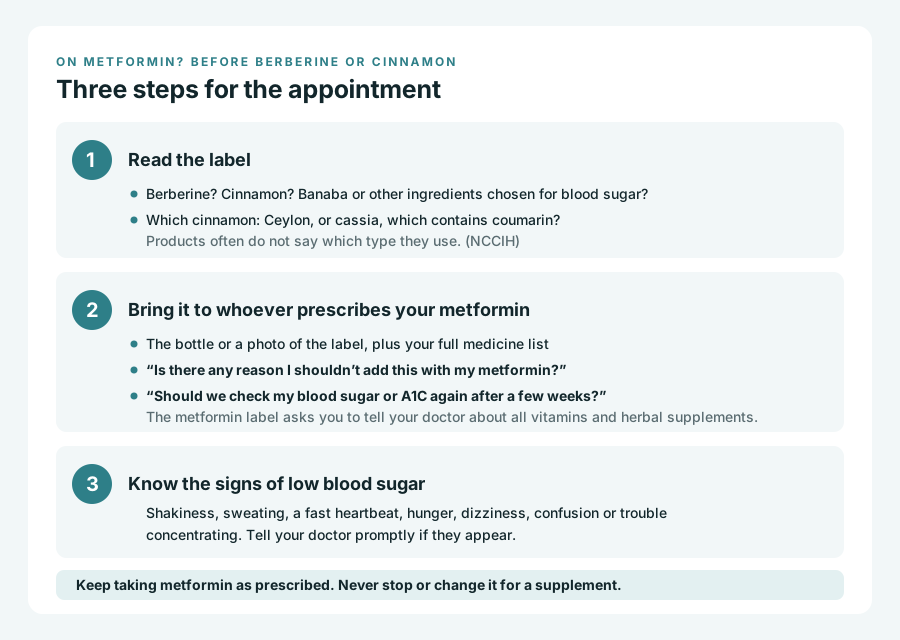
1. Read the label for blood-sugar ingredients
Look for berberine, cinnamon, and anything else chosen for blood sugar, such as banaba. For cinnamon, check which type: the NIH center notes that cassia, the most common type sold in North America, contains coumarin, which might cause or worsen liver disease in sensitive people, while Ceylon is considered “true” cinnamon. Its cinnamon fact sheet adds that products often do not say which species they use.
2. Bring it to the person who prescribes your metformin
Take the bottle, or a photo of the label, along with your medicine list. Three questions keep it short:
- “Is there any reason I shouldn’t add this with my metformin?”
- “Should we check my blood sugar or A1C again after a few weeks?”
- “Do any of my other prescriptions matter here?”
If an appointment is weeks away, a pharmacist can usually look at a label against your prescriptions.
3. Know the signs of low blood sugar
The metformin label lists them: headache, drowsiness, weakness, irritability, hunger, a fast heartbeat, confusion, shaking, dizziness and sweating. Cleveland Clinic includes confusion or trouble concentrating among the early signs. That overlap with “fog” is worth knowing: if the afternoon haze comes with shakiness or sweating, tell your doctor rather than reaching for another bottle.
And through all three steps, keep taking metformin exactly as prescribed. If you have not had your vitamin B12 checked on long-term metformin, that is a separate and useful question, covered in our guide to metformin and B12. The everyday habits that steady blood sugar after meals, such as a short walk after lunch, are in our article on brain fog after eating.
What Were Berberine And Cinnamon Studied For?
Both plants have human research, and in both cases what was measured was blood sugar, not memory or fog.
Berberine with metformin. A 2024 meta-analysis in Frontiers in Pharmacology pooled 50 randomised trials with 4,150 adults with type 2 diabetes. When berberine was added to diabetes medicines, fasting blood sugar, after-meal blood sugar and A1C came down further than with the medicines alone; in the trials that paired it with metformin specifically, A1C was about 0.8 percentage points lower. The authors reported no serious adverse reactions. They also noted that almost all the trials were run in China, that 31 of the 50 were rated low quality, and that most described blinding poorly.
Read the other way round, that finding is the reason for the conversation: a combination that lowers blood sugar more is one your doctor may want to follow with a test.
Cinnamon. A 2023 umbrella review in Diabetology & Metabolic Syndrome pooled 11 meta-analyses of trials in adults with type 2 diabetes or polycystic ovary syndrome and found lower fasting blood sugar, about 11 mg/dL, and a small fall in A1C of 0.10 percentage points. The NIH center’s 2024 cinnamon fact sheet says it is unclear whether cinnamon supplements help with diabetes, and that higher-quality research is needed. Memorial Sloan Kettering notes some improvement in blood sugar control across meta-analyses and says larger, well-designed trials are needed.
Neither of these reviews measured thinking, attention or memory.
What About The Memory Side Of A Formula?
Formulas sold for memory usually carry something for the brain directly, alongside or instead of the blood-sugar plants. Two such ingredients appear in the formulas below.
Saffron. A 2024 systematic review in Phytotherapy Research gathered 46 randomised trials lasting 4 to 48 weeks and found saffron more effective than placebo for cognition, as well as mood and sleep, and well tolerated. Its trials mixed healthy people and people with neurological or psychiatric conditions.
Bacopa. Bacopa is among the most studied botanicals for memory. The evidence is real and not unanimous: a 2025 trial in Clinical Drug Investigation gave 101 adults aged 40 to 70 with self-reported memory concerns 300 mg a day or placebo for 12 weeks and found no difference on the main memory and attention tests, while those on bacopa reported less stress and fatigue.
The honest timescale for any of these is weeks to months — the trials above ran 4 to 48 weeks — not days.
Which Formulas Could Fit After You Talk To Your Prescriber?
Once you have spoken to your prescriber, there are two reasonable directions, and the label tells you which one a formula takes.
If your doctor is comfortable with berberine and cinnamon alongside your metformin, Phytomem One is a once-daily tablet that puts them in one place: berberine HCl, Ceylon cinnamon and banaba, chosen for blood sugar, with saffron leading a separate group for the mind. It names ten ingredients and publishes no amount for any of them, so how much berberine a tablet holds cannot be checked against the trials from the outside. Its medicines page goes through what to mention, medicine by medicine.
If you would rather leave blood sugar to your prescription, NeuroVera is a stimulant-free capsule built around bacopa and lion’s mane, with gotu kola, schisandra and shilajit alongside. None of its five named ingredients appears on the NIH center’s page on diabetes and dietary supplements. It also publishes no amounts; the bottle states 60 capsules at two a day.
Two formulas worth a closer look
Two formulas for after you have asked
One brings berberine and Ceylon cinnamon into a memory formula; the other has no ingredient chosen for blood sugar. Each comes with a money-back guarantee.
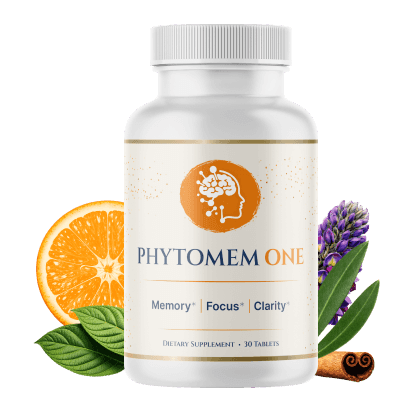
Phytomem One
Tablets
One tablet a day with food: berberine, Ceylon cinnamon and banaba, ingredients studied for blood sugar, plus saffron, which has human trials on cognition.
- Readers whose doctor has agreed to berberine with their prescription
- Anyone who wants one tablet a day
Covered by a 60-day money-back guarantee
Before you start · Berberine and Ceylon cinnamon are the ingredients to raise if you take metformin or other diabetes medicine.
See Phytomem One on the official siteRead our Phytomem One review
NeuroVera
Capsules
A stimulant-free capsule built around bacopa and lion’s mane, with gotu kola, schisandra and shilajit, and no ingredient chosen for blood sugar.
- Readers who would rather leave blood sugar to their prescription
- Anyone who wants to start with a single bottle
Covered by a 365-day money-back guarantee
Before you start · Mention bacopa if you take thyroid medicine or a sedative.
See NeuroVera on the official siteRead our NeuroVera reviewListed in no particular order. We publish no scores or rankings.
Who Should Check Before Starting?
Everyone on metformin should take the label to their prescriber first. A few situations add a specific point to raise.
- If you also take insulin or a sulfonylurea. The metformin label notes these are known to cause low blood sugar, and Memorial Sloan Kettering notes lab studies suggesting berberine may affect how sulfonylureas are processed.
- If you take cyclosporine or tacrolimus after a transplant. Memorial Sloan Kettering says berberine may raise blood levels of these medicines.
- If you take a statin. Memorial Sloan Kettering records reports of liver inflammation when cinnamon was taken with statins.
- If you have liver disease. The NIH center notes that the coumarin in cassia cinnamon might cause or worsen liver disease.
- If you take a blood thinner, thyroid medicine or a sedative. The Phytomem One medicines page lists fucoidan and saffron to mention with a blood thinner; the NeuroVera review flags bacopa with thyroid medicine or a sedative.
Never stop, reduce or change metformin, or any prescription, to make room for a supplement.
When Should You See A Doctor?
Tell your doctor promptly if you notice shakiness, sweating, a racing heart or confusion, especially after starting anything new; the metformin label lists these among the signs of low blood sugar. Cleveland Clinic advises calling emergency services for a severe low.
Ask for an appointment, too, if the afternoon fog keeps coming back, or if your memory seems to be changing month over month. Those are worth a proper look, and your A1C and B12 results are a good place to start the conversation.
Ready to compare? Go back to the two formulas above, or read the full reviews of Phytomem One and NeuroVera.
Frequently asked
Can I take berberine with metformin?
Only after asking the person who prescribes your metformin. The NIH’s complementary health center says berberine may interact with some medicines and advises talking with your provider first. In trials pooled in a 2024 meta-analysis, adding berberine to metformin lowered blood sugar further than metformin alone, which is exactly why your doctor may want to watch your numbers.
What are the side effects of berberine and metformin together?
Digestive complaints are the side effect most often reported for berberine. A 2023 meta-analysis of placebo-controlled trials lasting 4 to 24 weeks found gastrointestinal side effects tended to be more frequent with berberine than with placebo (2% to 23% vs 2% to 15%), with no serious ones reported. For the pair, a 2024 meta-analysis found that berberine added to diabetes medicines lowered blood sugar further, so know the signs of low blood sugar. Ask your prescriber first, and say if you are pregnant, take other prescriptions or have surgery coming up; the section on who should check lists specific medicines.
Can I take a cinnamon supplement with diabetes medication?
Ask first. The NIH’s complementary health center says that using herbal supplements such as cinnamon with conventional diabetes drugs can cause unwanted side effects, and Memorial Sloan Kettering notes that cinnamon may lower blood sugar. Take the bottle to your appointment so your doctor or pharmacist can see the exact product.
Can berberine replace metformin?
No. The NIH’s complementary health center says it is very important not to replace medical treatment for diabetes with an unproven health product. Keep taking metformin as prescribed, and never stop, reduce or change it to make room for a supplement.
What should I check before taking a memory supplement with metformin?
Read the label for ingredients chosen for blood sugar, such as berberine, cinnamon or banaba, and bring it to your prescriber. The metformin label itself asks you to tell your doctor about all vitamins and herbal supplements. If the formula has none of those ingredients, the conversation is usually shorter, but it is still worth having.
Is Ceylon cinnamon different from the cinnamon in my kitchen?
Often, yes. The NIH’s complementary health center says cassia is the most common type sold in North America, while Ceylon is considered “true” cinnamon. Cassia contains coumarin, which might cause or worsen liver disease in sensitive people. Supplement labels do not always say which type they use, so look for the name.
What are the signs of low blood sugar to watch for?
The metformin label lists headache, drowsiness, weakness, irritability, hunger, a fast heartbeat, confusion, shaking, dizziness and sweating. Cleveland Clinic lists confusion or trouble concentrating among the early signs. If you notice them after adding any supplement, tell your doctor promptly.
References
- Diabetes and Dietary Supplements: What You Need To Know — NIH National Center for Complementary and Integrative Health — 2023
- Cinnamon — NIH National Center for Complementary and Integrative Health — 2024
- Berberine — Memorial Sloan Kettering Cancer Center, About Herbs — 2023
- Cinnamon — Memorial Sloan Kettering Cancer Center, About Herbs — 2021
- Metformin Hydrochloride Extended-Release Tablets — Prescribing Information, DailyMed (U.S. National Library of Medicine) — 2021
- Hypoglycemia (Low Blood Sugar) — Cleveland Clinic — 2026
- Effects of administering berberine alone or in combination on type 2 diabetes mellitus: a systematic review and meta-analysis — Frontiers in Pharmacology — 2024
- Overall and Sex-Specific Effect of Berberine for the Treatment of Dyslipidemia in Adults: A Systematic Review and Meta-Analysis of Randomized Placebo-Controlled Trials — Drugs — 2023
- The effect of cinnamon supplementation on glycemic control in patients with type 2 diabetes or with polycystic ovary syndrome: an umbrella meta-analysis on interventional meta-analyses — Diabetology & Metabolic Syndrome — 2023
- New horizons for the study of saffron (Crocus sativus L.) and its active ingredients in the management of neurological and psychiatric disorders: a systematic review of clinical evidence and mechanisms — Phytotherapy Research — 2024
- The Effects of a Bacopa monnieri Extract (Bacumen®) on Cognition, Stress, and Fatigue in Healthy Adults: A Randomized, Double-Blind, Placebo-Controlled Trial — Clinical Drug Investigation — 2025
Disclosure
All content is for informational purposes only and is not a substitute for professional medical advice, diagnosis, or treatment. Each product covered is a dietary supplement, not a prescription drug, and statements about it have not been evaluated by the U.S. Food and Drug Administration. Results vary with individual health status, consistency of use, and lifestyle. This page contains affiliate links — if you buy through them we may earn a small commission at no additional cost to you. Read our disclosure and our editorial policy.